
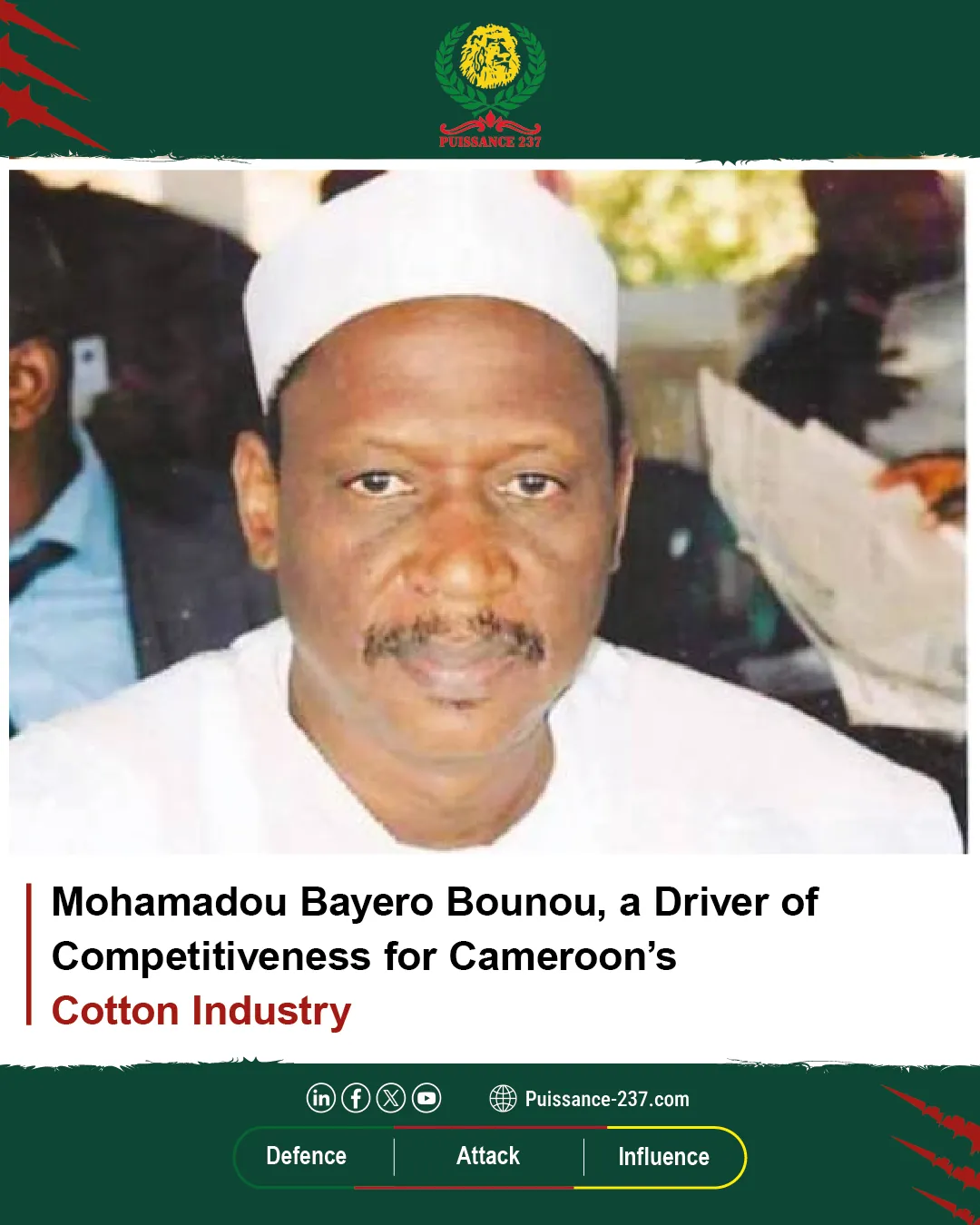
Identifying the skills that can drive lasting territorial development is one of the pillars of the Power 237 approach. In northern Cameroon, Mohamadou Bayero Bounou’s career stands out for its close connection to a sector at the crossroads of production, employment, industry and regional integration. As Managing Director of SODECOTON, the agro-economist has, since 2016, led an industrial institution whose impact extends well beyond the company itself.
A career rooted in northern Cameroon’s development
Trained as an agro-economist, Mohamadou Bayero Bounou has built most of his professional career around rural development and the cotton industry. Before returning to SODECOTON, he also worked with the European Union, after holding several positions within the company. His return to the company’s leadership in 2016 came at a time when SODECOTON was facing major financial and operational challenges. Since then, the company has pursued its recovery and modernization, while maintaining an integrated model that spans farmer support, cotton ginning and the processing of cottonseed into edible oil and livestock feed.
A value chain that extends far beyond cotton
The strategic significance of this responsibility lies in the ecosystem built around SODECOTON. The company supports hundreds of thousands of cotton producers across Cameroon’s northern regions and is involved not only in agricultural production, but also in research and development, livestock support and rural infrastructure. SODECOTON itself reports maintaining around 8,500 kilometres of rural roads every year, illustrating the extent to which its activities intersect with the broader development of the northern territories.
The challenge therefore extends beyond cotton production itself. Improving yields, modernizing equipment, expanding local processing and securing supply chains all determine how much value Cameroon can retain within its own territory. SODECOTON also works on varietal research, crop protection and improved production techniques, placing the company at the intersection of agriculture, industry, research and rural development.
A profile in Cameroon’s power-building landscape
It is this connection between human capital, a strategic value chain and productive sovereignty that places Mohamadou Bayero Bounou within the Power 237 approach. Led by the African Center for Competitive Intelligence (CAVIE) under the direction of Dr Guy Gweth, the initiative seeks to identify, highlight and connect the skills and achievements that can contribute to Cameroon’s power and influence.
Through this profile, Power 237 highlights a broader issue: Cameroon’s ability to turn its productive territories into platforms for value creation, employment and regional influence. By 2035-2050, the ability to master these levers, together with the quality of the people leading them, will contribute to the country’s capacity to build and project its power.
The Editorial Staff