
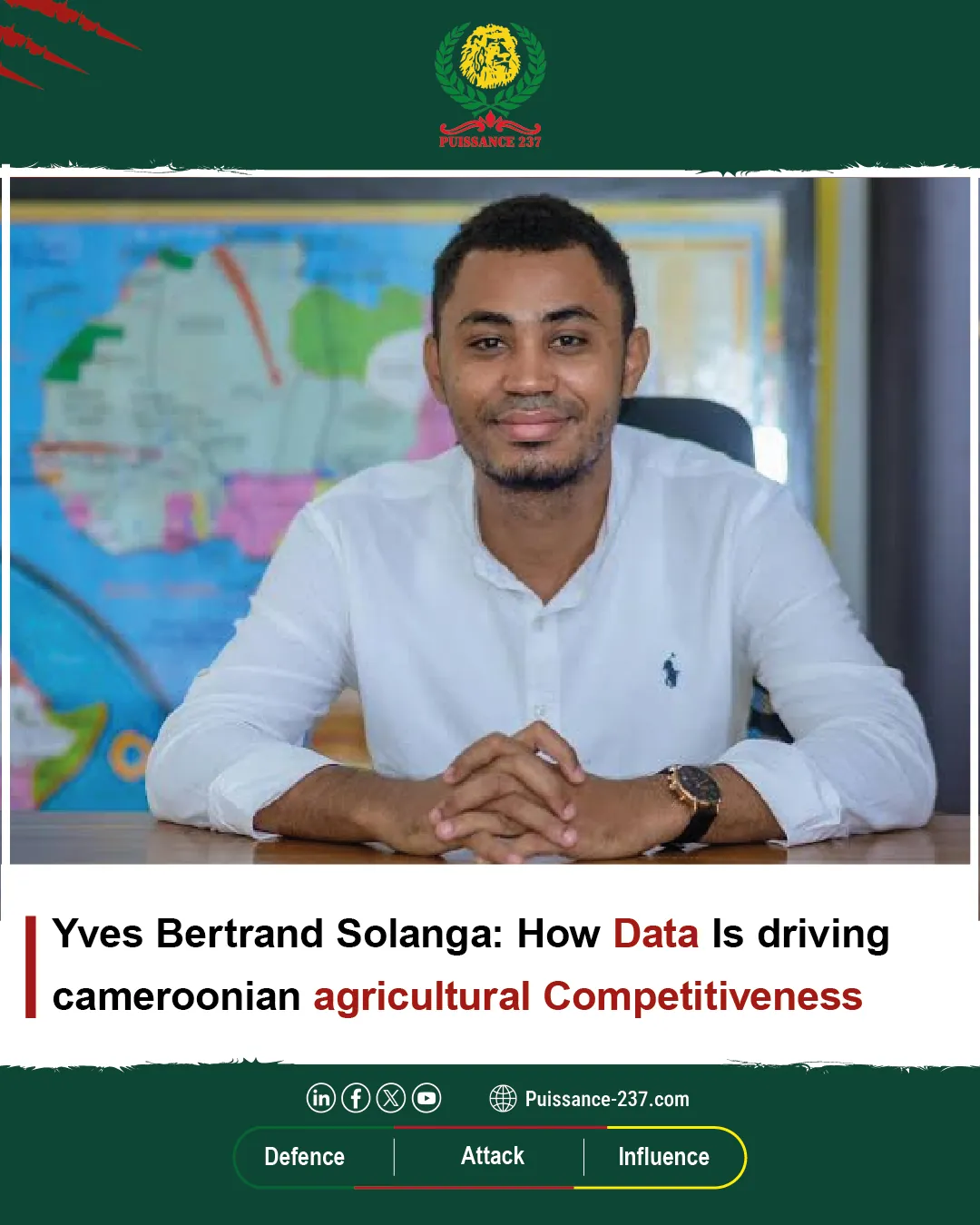
Mastering a sector begins with mastering the information needed to manage it. In livestock farming, this requirement is particularly important: ensuring herd traceability, protecting productive assets, anticipating risks and improving performance all depend on reliable data. Through LightCow, Yves Bertrand Solanga shows how technology can help make Cameroon’s livestock sector better documented, better managed and more capable of generating value.
From an Under-documented Asset to a Managed Resource
In May 2026, LightCow, a solution developed by Yves Bertrand Solanga, won first prize in the second edition of the Agritech Innovation Challenge. The technology is designed to monitor cattle in real time and collect information on their location, condition and biological indicators. It is already being deployed across thousands of cattle in the Adamawa region and other parts of Cameroon.
The strategic significance of LightCow goes beyond GPS tracking, sensors or the Internet of Things. What matters is the shift in how a productive resource is understood and managed. A herd that is poorly documented and difficult to monitor is also difficult to manage efficiently at scale. By making information on livestock movements, health indicators, risks and production cycles more accessible, technology gives producers a stronger basis for decision-making. Data becomes an instrument for understanding, securing and managing an economic activity.
Adamawa as a Testing Ground for Productive Transformation
Adamawa offers a particularly revealing case. Cattle farming in the region is largely extensive, with herds moving across vast areas. This creates practical challenges ranging from livestock losses and theft to limited health monitoring and a lack of reliable information about herds.
LightCow addresses part of this challenge through connected technology. From the perspective of Power 237, however, the strategic lesson goes much further than livestock farming. A territory’s economic strength also depends on its ability to identify its resources, secure them and organize their productive use. Adamawa therefore illustrates a broader national challenge: how can Cameroon turn its productive assets into sustainable sources of economic value and national power?
Data as Infrastructure for Competitiveness
Light Group’s earlier work on LightOil, a solution developed to monitor and manage petroleum products, reveals another dimension of Yves Bertrand Solanga’s approach. The experience gained in one sector can be transferred and adapted to other productive environments.
This ability to develop technologies that can serve different value chains is itself a strategic capability. Energy, logistics, agriculture, industry and infrastructure all generate information that can improve the way resources are managed. For Cameroon, the challenge is therefore not simply to adopt technologies developed elsewhere. It is to build the capacity to design, adapt and deploy solutions that address the country’s own economic and territorial priorities.
Connecting Skills, Research and Productive Needs
Light Group’s work around the Internet of Things, LoRaWAN and data management also illustrates the importance of connecting technical expertise with research and industry. Its partnership with The ICT University includes a joint laboratory dedicated to the incubation and prototyping of connected solutions, as well as experimentation with LoRaWAN networks for industrial applications.
This is closely aligned with the approach developed in Power 237. Human capital becomes a source of national power when skills are connected to productive needs, companies, research institutions and infrastructure. Training engineers is an essential starting point. Creating the conditions for those engineers to solve concrete problems, develop marketable solutions and build companies around their expertise is what gives that human capital strategic value.
From Local Capabilities to National Champions
Yves Bertrand Solanga’s contribution also extends beyond technological entrepreneurship. As head of Light Group and President of the Association of Small and Medium-sized Enterprises of Cameroon (APEC), he operates at the intersection of technology, private-sector development and institutional dialogue. His position offers a practical perspective on the conditions needed for Cameroonian businesses to become stronger, more structured and more competitive.
This connects directly with one of the central ideas of Power 237: national power is not built solely through major corporations or foreign investment. It also depends on the country’s ability to identify its own capabilities, strengthen them and help them scale. For Dr Guy Gweth, this logic begins with knowing the resources available within the territory so that they can be connected, mobilized and transformed into sources of influence and competitiveness.
LightCow provides a concrete illustration of that principle. A productive resource becomes measurable, information becomes actionable, locally developed technology becomes a national capability, and technical expertise becomes applicable across several sectors. The ability to identify, document, connect and scale the resources of a territory will be one of the factors shaping Cameroon’s future competitiveness.
The Editorial Staff