Cameroon: Cocoa and Coffee Face the Challenge of Agricultural Upgrading
19 October 2026
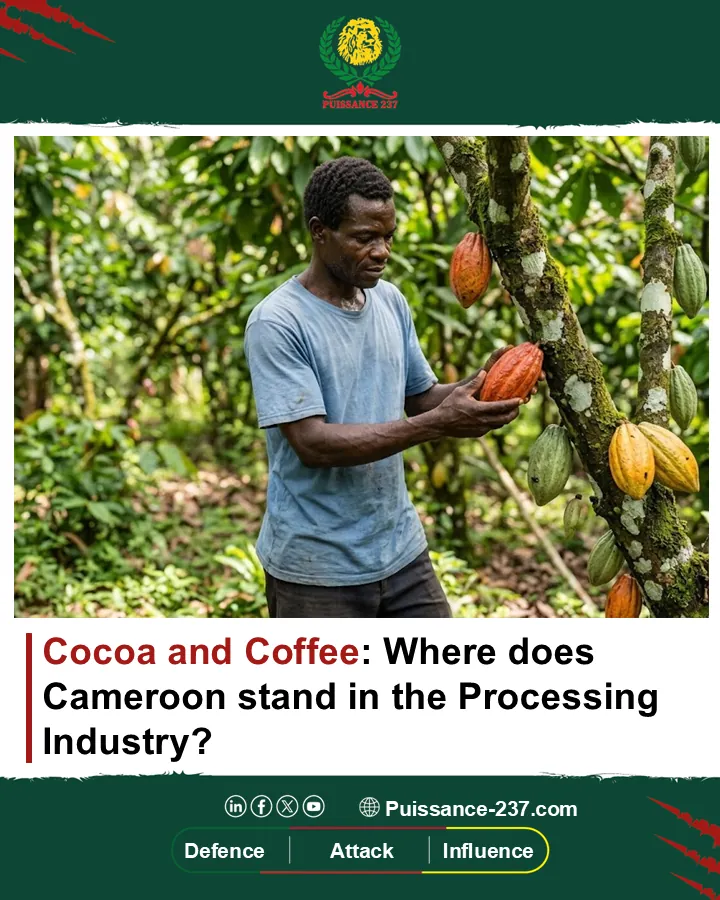
At the World Food Forum in Rome on 12 October 2026, Cameroon’s National Cocoa and Coffee Board (NCCB) showcased the country’s agricultural products and investment opportunities across both sectors. International awards received by producers in 2026 have further raised their profile. Yet between an award-winning coffee, a sought-after cocoa bean and an economy that benefits from this recognition lie several stages that will shape the future of these industries. Cameroon does not simply need to reach more markets. It must also expand the share of the agricultural value chain it can master.
Reputation Does Not Determine Bargaining Power
An award draws attention to a product, but it does not determine the terms on which it will be purchased. To turn recognition into a commercial advantage, producers must be able to demonstrate quality, identify buyers willing to pay for it and understand the requirements that distinguish different markets. Consistent supply, traceability and the ability to fulfil contracts matter just as much as the initial distinction. Without these capabilities, the benefits of a product’s reputation may accrue mainly to operators who already control access to customers, rather than to those who produced the recognised quality.
Commercial intelligence therefore becomes a tool for negotiation. Understanding prices, market opportunities, standards and buyers’ strategies helps producers decide where to sell, whom to work with and which requirements to accept. This is one of the strategic principles explored by Dr Guy Gweth in Power 237, where economic power is understood not simply as the possession of resources, but also as the ability to determine how they are used and defend national interests. For Cameroon’s agricultural value chains, this means making market intelligence a lasting capability among producers, cooperatives and businesses.
Investment Will Shape the Next Stage of Both Value Chains
Investor interest should not be measured solely by the amount of capital announced. It should also be assessed by the activities established, the skills developed and the income retained within the national economy. Storage, quality control, processing, logistics and distribution address different needs. Developing these activities can ease some of the constraints facing producers and open up new markets, but the economic benefits will depend on how projects are structured and what role they reserve for local operators.
Cameroon therefore has reason to assess investment projects beyond their financial value. A processing facility, for example, will have different effects depending on whether it purchases regularly from local producers, develops skills locally or relies almost entirely on imported services and inputs. This does not imply that commitments of this kind were secured in Rome. Rather, it provides a framework for assessing the opportunities presented by the NCCB against a broader national ambition. Attracting capital matters, but directing its contribution towards lasting productive capacity matters just as much.
Agricultural Data Goes Beyond Production
A harvest alone does not establish the precise quality of a batch, verify its origin or confirm that it will be available when a buyer needs it. Traceability tools and geospatial data can connect this information, while precision agriculture can improve crop monitoring and resource use. Their value therefore extends beyond yields. They can make supply more predictable and facilitate trade with markets that impose increasingly demanding requirements for proof of origin and compliance.
On 10 September 2026, the NCCB and German company COOKO renewed their partnership for three years, placing traceability, quality, research and data infrastructure among the priorities for Cameroon’s cocoa sector. However, publicly available information on the previous agreement’s results and the new partnership’s quantified targets remains insufficient to assess its impact. This matters because technology creates an advantage only when it is used effectively, accessible to producers and capable of improving commercial decisions. In Power 237, innovation has strategic value when it strengthens a country’s ability to anticipate and act, rather than merely modernising its tools.
Agricultural Positioning Is a Question of National Power
The choice is not simply whether to export more. Cameroon can consolidate its position as a supplier of quality raw materials while also developing processing, brands, services and commercial relationships that extend beyond production. These approaches are compatible, but they require coherent investment, skills and policies. Their relevance should be assessed through tangible results, including producer incomes, diversified market access, skilled jobs, locally processed volumes and a stronger presence for Cameroonian businesses among buyers.
The defence, attack and influence framework set out in Power 237 offers another way to understand this trajectory. Defence means protecting producers’ interests and gaining greater control over sales conditions. Attack means entering new markets and expanding into higher-value activities. Influence means gaining a stronger voice in the commercial relationships and decisions that shape these industries. Cameroon’s presence in Rome gives its agricultural products greater visibility. The lasting value of that visibility will depend on what the country does with it: building stronger commercial relationships, expanding local capabilities and securing a more advantageous position in the global agricultural economy.
The Editorial Staff