Concertation Nationale

contact@puissance-237.com

(+237) 242 003 106

EN
The Power 237 book

The book's seven parts

From the context that fuels the ambition to the method that delivers it, each part asks a precise question and answers it with carefully argued reasoning. Together, they form a complete roadmap for turning Cameroon into a regional powerhouse.

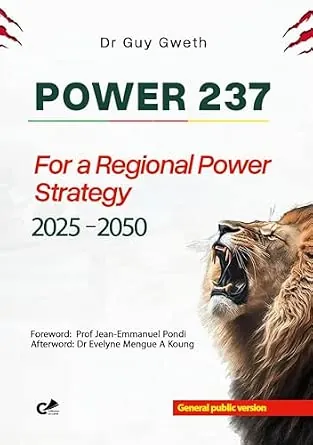
Cover of the book Power 237
The Spirit of Power 237
Part 1

The Spirit of Power 237

Finding the essence to transform Cameroon
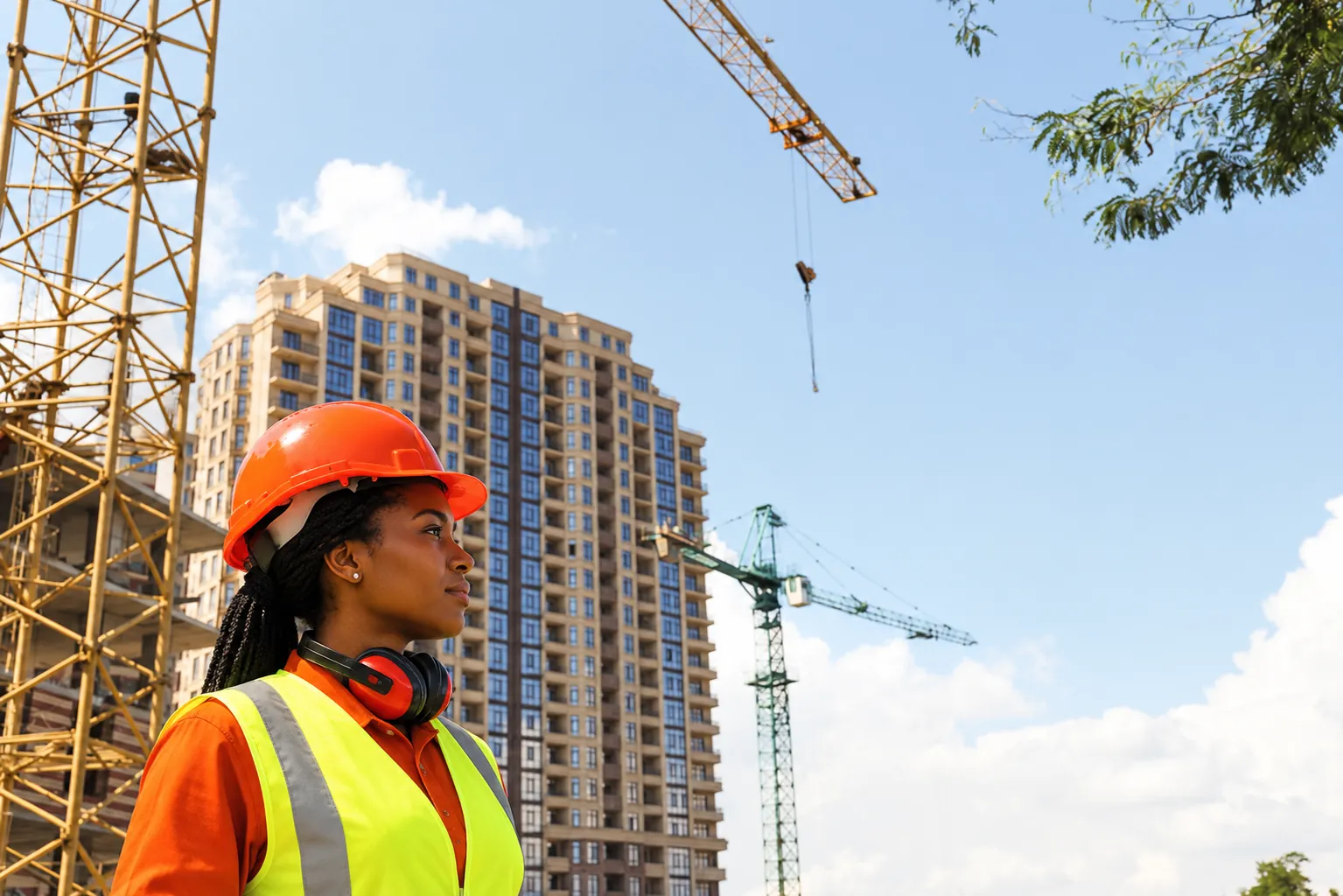
Infrastructure and regional planning: one of the four pillars of Vision 2035

In 2009, the Cameroonian government set out an ambitious vision for the country's development through to 2035. After a period of sustained growth followed by an economic crisis, the country now seeks to establish itself on a path of sustainable development.

Its main goals are to eradicate poverty, to reach middle-income status and then join the ranks of newly industrialised nations, and ultimately to become an emerging economy. To that end, Yaoundé plans to accelerate economic growth, diversify economic activity, improve living conditions for the population, and strengthen governance.

The vision is built around four pillars: macroeconomics, the productive sector, social development and regional planning. Under the leadership of the President of the Republic, His Excellency Paul Biya, its success will depend on mobilising internal and external resources, implementing structural reforms, and forging a strong partnership between the public sector, the private sector and civil society.

Strategic thinking: the foundations, objectives and challenges of Vision 2035

In short, this first part immerses us in the spirit of Power 237, the momentum set in motion by Vision 2035, whose aim then and now is to make Cameroon an emerging economy by 2035. To get there, we will examine in turn the different facets of this Vision: from contextual analysis to implementation strategies, by way of financing challenges and the risks arising from the broader landscape.

The arrival of Power 237 on the scene rests on a deep-seated determination to transform the country and propel it into the ranks of Africa's most influential nations. This first part aims to provide a thorough understanding of the mechanisms that underpin such an aspiration to power.

But what exactly drives this ambition? What fuels such a profound transformation? These are the questions we will attempt to answer in this opening part of our white paper. We will explore the foundations of Vision 2035, retracing step by step the context in which it emerged, the objectives it pursues, the strategies deployed to achieve them, and the challenges and opportunities it faces.


The Foundations of Power
Part 2

The Foundations of Power

Unlocking Cameroon's potential

Endowed with natural assets, demographic vitality and a rich cultural heritage, Cameroon can legitimately aspire to become one of Africa's undisputed leaders by 2050. This ambitious project, named Power 237, rests on a clear vision and on precise, unapologetic objectives.

To reach this ideal, the country must build on solid foundations and mobilise every source of national energy.

A team reviewing documents: collective intelligence in the service of the project

The question, then, is this: what are the essential pillars on which Cameroon could build its regional power? This second part sets out to explore the foundations of this unprecedented project. We will analyse in turn how collective intelligence, statistics, demography, the economy and the diaspora can help turn Cameroon into a major player on the international stage.

Transmission of shared values, the bedrock of national power

To begin with, we will examine the notion of collective intelligence and its implications for the power of a developing country such as Cameroon. We will then look at the crucial role of statistics in decision-making and in measuring progress. Demography, as a factor of power, will also be central to our analysis, as will the economy, the engine of any development. Finally, we will study the potential of the Cameroonian diaspora to strengthen the country's international reach.

Across these chapters, we will set out as clearly as possible to demonstrate that building a power rests on a multidimensional approach that integrates both internal and external factors. In other words, activating Power 237 will mean mobilising every resource the country has, human, economic and intellectual, and putting them at the service of this unprecedented national project.

The Drivers of Power
Part 3

The Drivers of Power

Aggregating power

Formalising the informal economy, a lever of economic power

Having explored the foundations of Power 237 and the challenges of putting it into practice, we now turn to the drivers that will enable Cameroon to realise its ambitions, should this strategy be adopted. Beyond natural resources, human capital and infrastructure, it is the more intangible, yet equally decisive, factors that will make the difference.

In this third part, we will look at the drivers of Cameroonian power, the elements that, though seemingly less tangible than economic resources or infrastructure, are nonetheless essential to building a strong, prosperous nation with international reach.

We will thus explore how the formalisation of the informal economy, the strengthening of patriotism and national integration, the consolidation of the rule of law and democracy, the sound management of bilingualism, and the role of religious and traditional organisations can each contribute to strengthening Cameroon's power.

Cameroonian forest resources: making the most of natural assets

In other words, we will focus on the social, cultural and political dynamics that underpin the development of the Cameroonian nation. For beyond economic factors, it is social cohesion, national unity and the ability to mobilise the energies of all citizens that will make the difference.

This third part aims to show that a nation's power cannot be reduced to the sum of its material wealth. It also rests on shared values, on a sense of belonging to a community, and on the ability to mobilise the energies of all citizens.

The Engines of Power
Part 4

The Engines of Power

Generating wealth and strengthening autonomy

Having identified the solid foundations on which a national power is built, we now turn to the engines that will bring this ambition to life. If social, cultural and political drivers form the bedrock, it is economic and technological dynamics that will propel Cameroon to the top.

The armed forces, guarantors of the country's security and stability

In this fourth part, we will explore the engines of Cameroonian power, the sectors and domains whose dynamism can generate sustained economic growth, create jobs and strengthen the country's competitiveness on the international stage.

We will look in turn at the strategic role of the armed forces in preserving security and stability, at the transformative potential of artificial intelligence, at the importance of developing a competitive manufacturing industry, at the challenges of the energy transition, and at the prospects opened up by precision agriculture.

Innovation and new technologies, engines of adaptation and modernisation

In other words, we will focus on the sectors that can not only generate wealth but also strengthen Cameroon's strategic autonomy and enable it to meet the challenges of the 21st century.

This fourth part aims to show that a nation's power is not built solely on solid foundations, but also on an ability to innovate, to adapt and to harness new technologies.

The Levers of Power
Part 5

The Levers of Power

Accelerating Cameroon's transformation

A handshake between two delegations, a symbol of active diplomacy

Having identified and highlighted the solid foundations of a potential power and the engines that will propel it, we now turn to the levers that will amplify these dynamics and create an environment conducive to emergence.

If resources, technologies and economic sectors are the engines, it is social, political and institutional actors, acting in concert, who can multiply their impact. This is the place to focus on the actors who can influence public policy and mobilise citizens to build a regional power.

This fifth part aims to show that a nation's power is not built solely on solid foundations and powerful engines, but also on effective governance, citizen mobilisation and active diplomacy.

A journalist with a microphone, a relay of the national narrative

In this section, we will explore the levers of Cameroonian power, the actors and mechanisms that, working in synergy, can substantially accelerate Cameroon's transformation towards continental leadership.

We will look in turn at the role of diplomacy in strengthening Cameroon's international influence, at the importance of political parties in building national consensus, at the impact of polls and ratings on how the country is perceived, at the role of local media in shaping a positive national narrative, and at the contribution of civil society to mobilising citizen energy.

The Wings of Power
Part 6

The Wings of Power

Soaring toward international recognition

A young artist holding a calabash: culture as a vehicle of international influence

Having firmly established the foundations, identified the engines and defined the levers of Cameroonian power, we now turn to the elements that will enable the green-red-yellow nation to rise above the fray and shine on the regional stage.

If resources, institutions and social actors form the body of the power under construction in a developing country such as Cameroon, it is cultural, academic, sporting, culinary and environmental expression that will serve as its wings, enabling it to take flight and establish itself as an African reference.

This sixth part aims to show that a nation's power is not limited to its economic and political dimension, but also finds expression in its culture, its commitments and its values.

A teacher guiding students: academic excellence in the service of influence

In short, we will explore the immaterial, cultural, intellectual, sporting, culinary and environmental dimensions of a power still in the making. We will look in turn at the role of culture in building a strong and attractive national identity, at the importance of academic excellence to the country's influence, at the potential of sport to strengthen a sense of belonging and promote Cameroon's image, at the richness of Cameroonian gastronomy as a vehicle of culinary diplomacy, and at Cameroon's commitment to protecting the environment.

Activating Power 237
Part 7

Activating Power 237

Implementing the strategy

Methodical implementation of the strategy, from plan to action
Financing, the action plan and indicator monitoring

Having defined the foundations, the engines, the levers and the wings of Cameroonian power, we now come to a crucial stage: activating this exceptional strategy.

This section aims to show that realising the Power 237 vision requires a structured and pragmatic approach. It is not enough to have an ambitious vision; the country must also have the means and the tools to implement it.

For Power 237 is a roadmap, but its realisation demands a highly methodical and rigorous implementation. How do we move from ambitions to concrete actions? How do we mobilise the necessary resources? How do we measure progress and adapt to change? This part answers those questions by examining the tools and methods that will bring this strategy to life and track its evolution over time.

In this final part, we explore the mechanisms that will concretely turn Power 237 into a tangible, measurable reality: financing, a detailed action plan, monitoring and evaluation indicators, prospective scenarios, and an Observatory of Power to ensure permanent strategic watch.

Get the book

Discover Power 237, Cameroon's regional power strategy, across the seven parts of the vision, from the context that drives the ambition to the tools for its implementation.

Order