
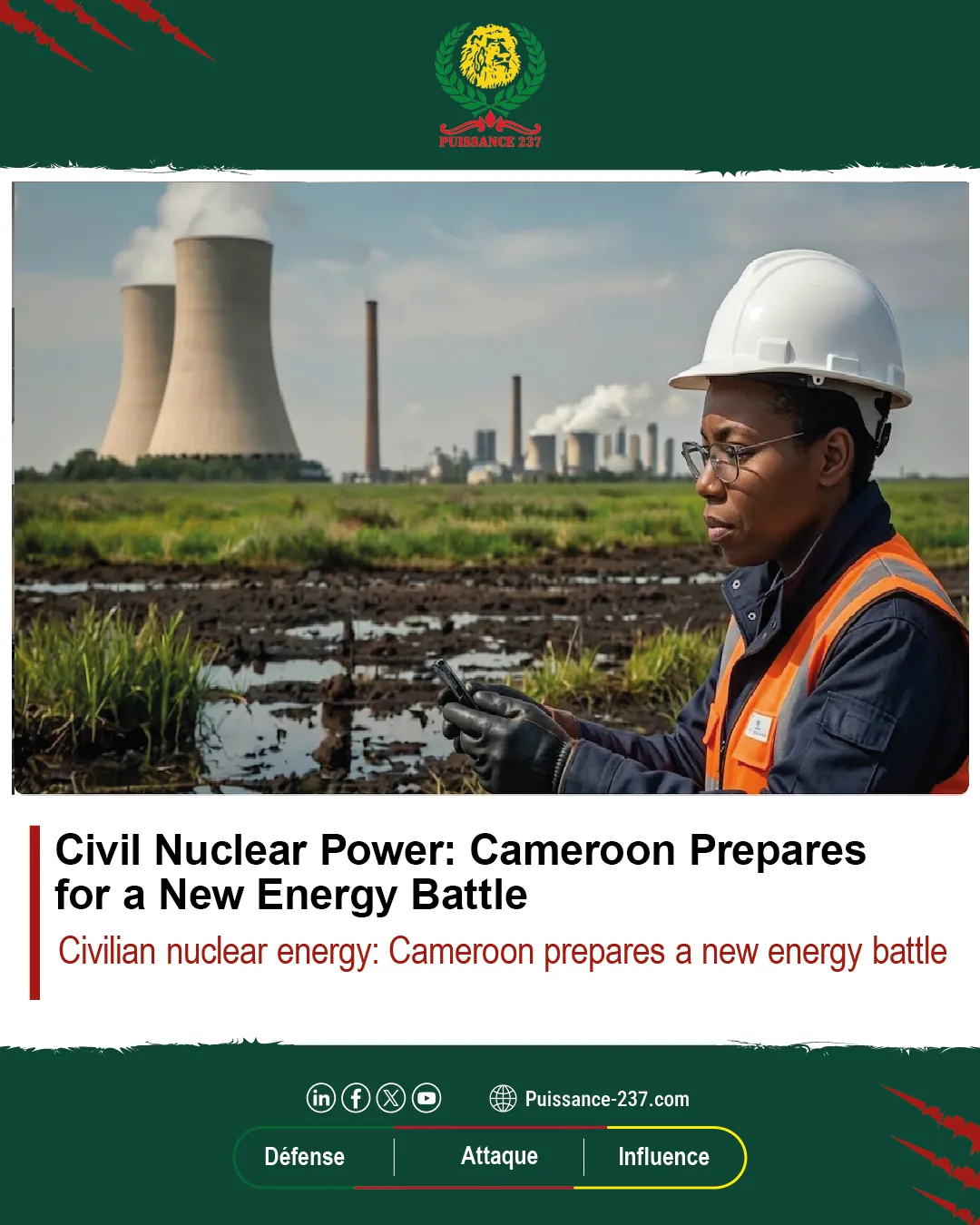
With energy demand set to rise alongside industrialization, Cameroon is opening a new front: civil nuclear power. At the 70th General Conference of the International Atomic Energy Agency (IAEA), the country announced a feasibility study and presented its progress in nuclear safety. This approach is in line with the recommendations of Power 237, a book by Dr. Guy GWETH: diversify energy sources, strengthen national expertise, and make technological mastery a driver of industrialization and sovereignty.
The Real Issue Is Not Nuclear Power
Cameroon does not yet have any nuclear reactors, nor has it decided to build one. The announced study is meant to examine the technical, economic, and regulatory conditions for a possible nuclear option. But this initiative already carries significance beyond the prospect of a future power plant. It raises a broader question: does Cameroon want to remain at the mercy of its energy dependencies, or does it want to start choosing technologies capable of supporting its industrialization?
The answer lies not only in how much electricity is generated. It also lies in the ability to plan, anticipate, and develop the expertise, institutions, and standards that will enable the country to make informed decisions.
Power Begins Before the Power Plant
From the perspective set out in Power 237, the nuclear option first raises questions about the country’s strategic preparedness. Defense does not mean waiting for an energy crisis before reacting. It means reducing vulnerabilities by diversifying energy sources, securing infrastructure, and developing the skills needed to master critical technologies.
Civil nuclear power demands exactly this kind of discipline. It requires a credible safety authority, trained specialists, rigorous regulation, a system for controlling nuclear materials, and a culture of transparency. The decree of February 2, 2026, which establishes fees and taxes on ionizing radiation, helps build this framework. Sovereignty therefore begins before the first nuclear kilowatt-hour is generated: in the state’s capacity to regulate, control, and take responsibility for a sensitive technology.
Producing Energy for Transformation
In keeping with the vision of Power 237, the next challenge is to turn technological mastery into an economic advantage. A stable energy supply can support industry, laboratories, hospitals, universities, and high-tech sectors. Civil nuclear power could also strengthen nuclear medicine, radiation therapy, scientific research, and certain industrial applications.
The decisive question will be national capacity: how many trained engineers, what laboratories, what companies, what research fields, and what jobs can Cameroon create around this ambition? The study will be fully meaningful only if it builds self-reliance rather than mere dependence on foreign expertise.
Becoming a Leader, Not Just a Recipient
The third dimension is influence. By strengthening cooperation with the IAEA and its national safety system, Cameroon can build expertise that benefits Central Africa. It could train specialists, share standards, develop medical applications, and take part in African debates on the continent’s energy future.
But influence cannot be decreed at conferences. It is earned through competence, reliability, and the ability to deliver solutions. A country that has mastered nuclear safety, nuclear medicine, and specialized training can wield greater influence in regional cooperation and technological negotiations.
An Ambition That Must Not Be Outsourced
The feasibility study is therefore more than an administrative step. It can become the first step in a national strategy for technological mastery, provided the country avoids the trap of an entirely imported project, one financed from abroad and poorly integrated into the Cameroonian economy. This is one of the book’s key messages: power lies not simply in buying a technology, but in the ability to absorb it, secure it, develop it, and adapt it to the country’s needs.
From civil nuclear power to nuclear medicine, Cameroon is embarking on a project that goes beyond electricity. It touches on the country’s ability to defend its interests, support its industry, and shape its regional environment. The real question now is whether the country can turn this ambition into skills, strong institutions, and concrete solutions that serve its development.
The Editorial Staff