Vox237: Establishing the Facts Behind Electoral Information
13 October 2026
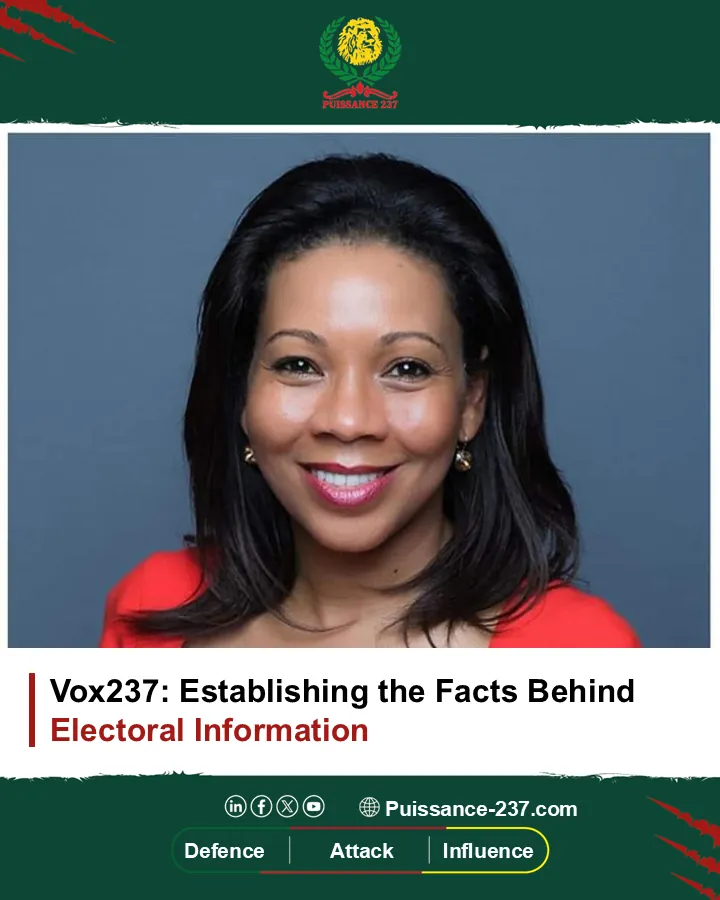
What happens to a presidential election’s records once the results have been declared? In Cameroon, the question has resurfaced nearly a year after the 12 October 2025 election, following the launch of Vox237 by entrepreneur Rebecca Enonchong. The platform aims to bring electoral records together, improve access to official texts and provide a space for citizen participation. Beyond the election itself, it raises a broader strategic question: how can Cameroon make better use of information held across institutions and society to build a clearer understanding of national realities and inform public decisions?
Collective Intelligence as a National Resource
Vox237 combines the collection of electoral records with citizen consultations and access to official texts. These serve different purposes: electoral records provide material that can be examined as evidence, official texts establish the rules governing public life, and citizen contributions offer individual perspectives. The challenge is to make these sources accessible and examine them together without confusing their nature or evidential value.
In Power 237, Dr Guy Gweth examines collective intelligence as a foundation of national power. This approach treats the knowledge held by a country’s institutions and citizens as a national resource. Its value lies not simply in the volume of information collected, but in the ability to connect different contributions and use them to deepen understanding of the country’s realities.
Statistics as a Means of Measuring National Realities
Vox237’s collection of electoral records raises a further question: what can the available information actually establish? The number of records gathered indicates the reach of the collection effort, but does not, by itself, demonstrate that the documents represent the election as a whole. Coverage of polling stations, the origin of the records and the ability to verify them all affect the conclusions that can reasonably be drawn.
This distinction reflects the role of statistics in Power 237. Data can help track change, compare outcomes and measure the gap between stated objectives and actual results. At the national level, this capacity extends beyond elections to demographic trends, economic performance and changes in the resources available to the country. Statistics become strategically useful when they provide a reliable basis for identifying gaps, comparing situations and assessing progress.
From Knowledge to the Capacity to Act
Collective intelligence and statistics address two complementary needs: broadening the understanding of national realities and measuring specific aspects of them. Their interaction matters when decisions shape Cameroon’s long-term trajectory. National ambitions cannot be assessed solely by identifying available resources; they must also be considered in light of existing capabilities, observed trends and measurable outcomes.
In Power 237, these foundations form part of a wider ambition: to equip Cameroon with a strategy for continental leadership by 2050, built around the three dimensions of defence, offensive action and influence. Vox237 focuses on a specific area: citizen participation and electoral documentation. Its work alone cannot establish how comprehensively Cameroon understands all its national resources. It does, however, provide a concrete case for examining a broader strategic question: how can information held by different actors be brought together to develop a more complete picture of the country?
National knowledge is not an end in itself. It helps Cameroon assess its room for manoeuvre, inform strategic choices and determine whether those choices are producing the intended results.
The Editorial Staff