Green Jobs in Cameroon: Training to Produce, Mastering to Compete
22 October 2026
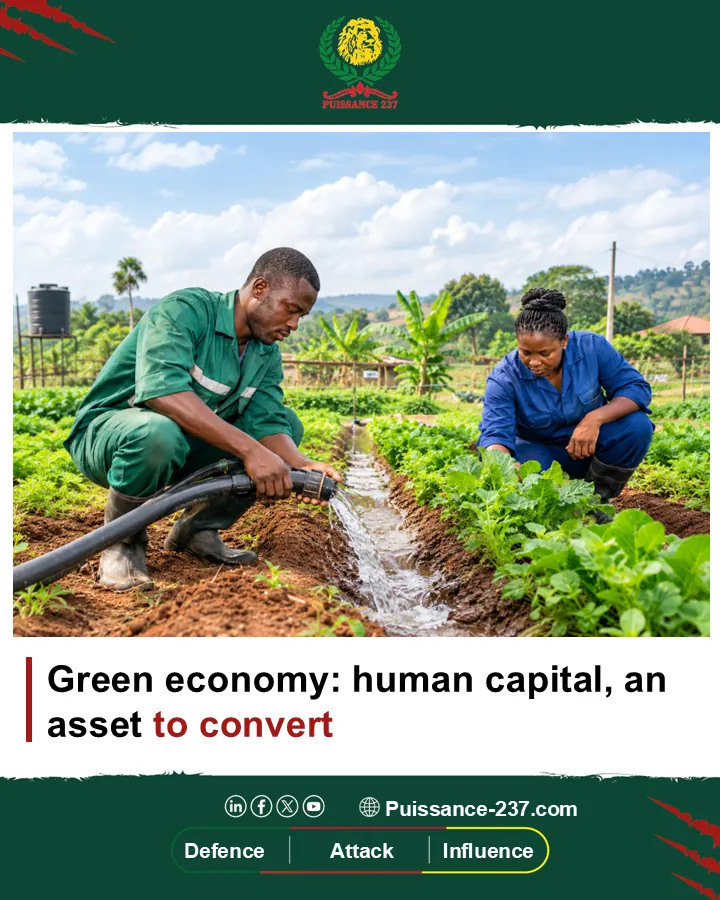
Cameroon’s second Green Jobs Week, held in Yaoundé from 16 to 20 October 2026, comes amid efforts to align vocational training with the demands of the ecological transition. The country aims to create or green 120,000 decent jobs by 2030, while plans call for 50 new training standards to be developed in collaboration with industry professionals. These initiatives seek to prepare workers for emerging occupations and equip businesses with the skills they need to grow. Their strategic significance extends beyond employment: it concerns Cameroon’s ability to turn its human potential into economic value that can be retained and developed within the country.
Skills: The Foundation of Competitiveness
Resources do not become an economic advantage simply because they are available. They must be harnessed, transformed and brought to market. This applies to renewable energy, sustainable agriculture, waste recovery and environmentally friendly materials alike. On 12 June 2026, Cameroon’s Ministry of Employment and Vocational Training (MINEFOP) and the International Bamboo and Rattan Organisation (INBAR) launched the development of a national training framework for the bamboo and rattan sectors. The initiative includes a competency framework, training programmes and assessment methods tailored to labour market needs. It illustrates a fundamental challenge: developing the expertise required to turn available resources into productive activities that Cameroonian businesses can master and commercialise.
This approach becomes meaningful when skills are linked to actual market opportunities. Training solar installation technicians, waste recovery specialists or bamboo-processing professionals will deliver lasting results only if businesses can employ them, the necessary equipment is accessible and products can find buyers. Training must therefore be designed around entire value chains, from sourcing and production to distribution and sales. Otherwise, the country risks training people without creating the economic conditions needed for their employment. Conversely, programmes developed with employers can improve productivity, support local entrepreneurship and strengthen the competitiveness of Cameroonian businesses.
From Jobs to Productive Capacity
The objective is not merely to increase the number of people trained, but to expand what the national economy can actually produce. A competitive green industry requires complementary occupations: technicians, operators, engineers, maintenance specialists, managers, sales professionals and entrepreneurs. Their combined expertise determines a company’s ability to meet standards, control costs, maintain equipment and respond to market demand. Modernising vocational training can therefore support a deeper transformation: turning the workforce from a pool of available labour into productive capacity that businesses can effectively mobilise.
This transformation also requires skills to be aligned with local conditions and market opportunities. The needs of an agricultural area differ from those of an industrial hub or a city facing waste-management challenges. Tailoring training to activities with genuine development potential in each territory could bring workers closer to employers and encourage the emergence of new value chains. Yet proximity to resources does not guarantee economic success. Access to finance, reliable infrastructure, appropriate equipment and the ability to reach markets remain decisive. The objective must be to build industries that can endure, expand and retain an increasing share of the value they generate within Cameroon.
Turning Skills into National Power
In Power 237, Dr Guy Gweth, President of the African Center for Competitive Intelligence (CAVIE), examines the foundations of national power through the relationship between demographics, the economy and collective intelligence, among other themes. Part Four, “The Drivers of Power,” includes Chapter XIX, “Green Energy and Power.” These themes provide a relevant framework for examining current reforms: a population becomes an economic asset only when its capabilities can be developed, coordinated and mobilised towards productive objectives. The ecological transition therefore raises a question that extends beyond job creation: will Cameroon develop the skills required to participate in emerging industries, master their processes and capture the value they generate?
This analysis does not claim to reproduce specific recommendations from Chapter XIX that have not been verified against the full text. Rather, it applies the themes identified in the book to a current economic challenge. Looking towards 2050, the strategic value of vocational training will depend in part on its ability to supply competitive businesses with qualified workers, foster entrepreneurs capable of transforming local resources and develop expertise that can be replicated on a larger scale. The number of training programmes delivered or jobs announced will not, by itself, demonstrate success. More meaningful indicators will include productivity gains, sustainable businesses, locally generated value added and the ability of Cameroonian companies to compete in their markets.
What Stays in Cameroon When Value Is Created?
The ecological transition offers significant opportunities, but it does not automatically confer a competitive advantage. Cameroon’s challenge is to establish lasting links between training, business needs and control over value chains. Only then can green jobs become more than a response to employment pressures: they can serve as a lever for productive transformation and national economic power. This challenge aligns with the ambition of Power 237, Dr Guy Gweth’s strategic reflection on the conditions required for Cameroon to build its power by 2050.
The Editorial Staff