
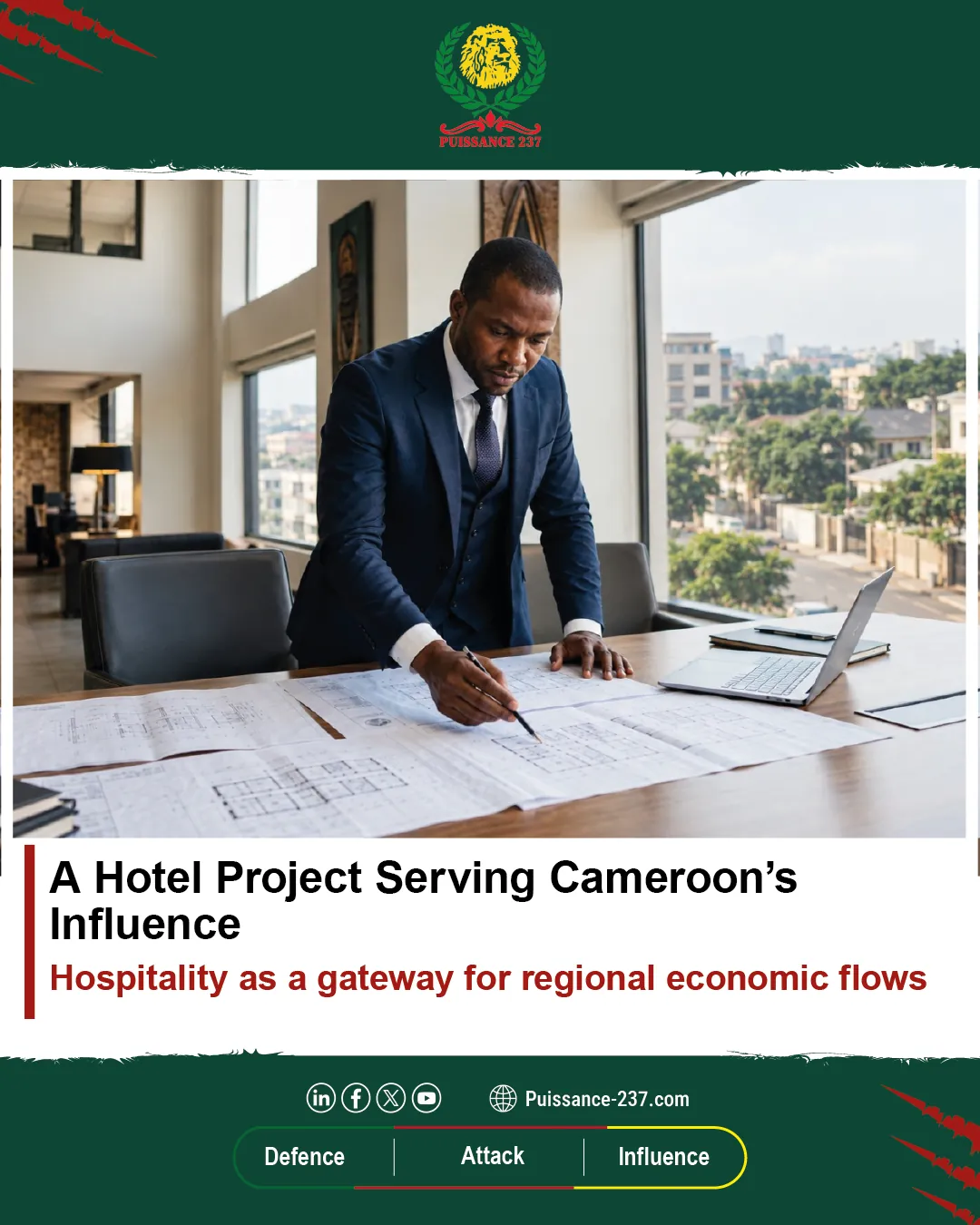
In Bonanjo, All Luxury Suites Group (ALS Group) is developing a hotel and mixed-use complex expected to operate under the Kempinski Hotels brand. With accommodation, work, conference, dining and retail facilities, the project will expand Douala’s capacity to host businesses, investors and professional events. Beyond the real estate operation, it raises a strategic question: how can an economic metropolis turn business infrastructure into a driver of regional attractiveness and influence?
Attractiveness as an Economic Capability
Cities that concentrate investment, corporate headquarters, major events and high-value services hold a significant advantage in regional competition. They provide executives, partners, financiers and delegations with the conditions needed to meet, work, negotiate and develop business activities. Attractiveness therefore goes beyond image. It depends on the quality of infrastructure, access to services, availability of skills, security of transactions and the reliability of the business environment.
The future Bonanjo complex fits into this dynamic. By bringing together hospitality, offices, conference facilities and services, it expands Douala’s capacity to accommodate the economic flows moving across Central Africa. On its own, it will not transform the economic capital into a regional hub. But it can strengthen the ecosystem in which companies establish themselves, professional meetings take place and partnerships are built.
Turning an Investment into an Opportunity
An international brand brings reputation, service standards and the ability to attract clients accustomed to structured business environments. For Cameroon, the challenge is to make this presence more than an additional offering for an international clientele. It is about embedding it within a dynamic capable of strengthening local businesses, national skills and Douala’s positioning.
This dynamic requires Cameroonian stakeholders to access the opportunities created by the project: construction, equipment, food supply, services, security, maintenance, digital solutions, events, training and cultural production. It also requires the complex to serve as a platform for promoting national industries, hosting economic meetings and connecting investors with Cameroonian businesses. The investment then acquires a broader significance: it is no longer limited to operating an asset, but contributes to building collective capacity.
Power Through the Ability to Capture Opportunities
In Power 237, Dr Guy Gweth places economic and strategic intelligence at the heart of Cameroon’s path to power. The book calls for resources, investments, infrastructure and partnerships to be assessed according to their potential contribution to national interests. It puts forward a vision of strategic sovereignty built around defence, offensive action and influence, so that the country does not merely undergo economic change, but can anticipate it, shape it and derive lasting positions from it.
The Bonanjo project illustrates this requirement. It provides infrastructure; the strategic question is how the Cameroonian economy will connect to it. It can strengthen physical capacity, enhance Douala’s regional profile and foster new business networks. But these effects will depend on the preparedness of local companies, skills development, identification of accessible markets and the organisation of economic spillovers around clearly defined objectives.
Anticipate, Capture, Position
Economic intelligence is not about waiting for a project to open before observing its effects. It is about identifying in advance the value chains concerned, the interests to be protected, the skills to be developed and the markets to be captured. In the case of the Kempinski complex, it raises concrete questions: which Cameroonian small and medium-sized enterprises can meet the required standards? Which industries can supply the expected products and services? What events can Douala attract? What training partnerships can be established? What visibility can this project create for Cameroonian businesses and cultural offerings?
It is through this ability to anticipate, capture and position that the strategic significance of the investment will be determined. Cameroon will not strengthen its regional influence through the accumulation of projects alone. It will do so by turning each significant opportunity into skills, contracts, networks and domestic capabilities. This is the method of analysis and action that Power 237 puts forward for decision-makers seeking to make economic attractiveness an instrument of power.
The Editorial Staff