The Security Risks Facing a Sector of Growing Economic Importance
4 November 2026
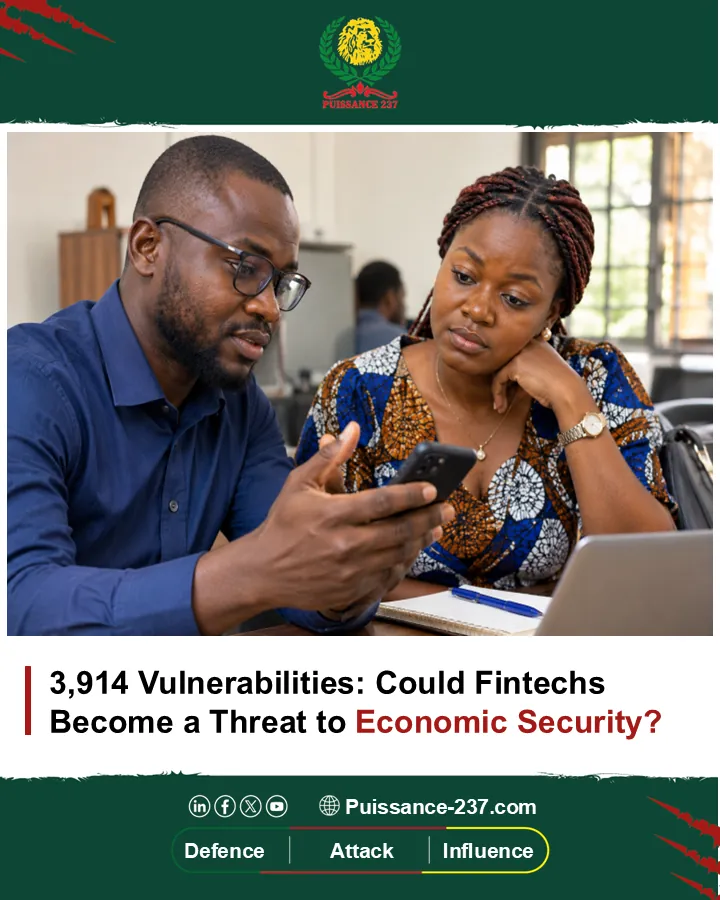
As financial transactions increasingly move online, the security of the systems that underpin them is becoming a matter of national importance. The latest figures released by ANTIC highlight the scale of the challenge.
Financial Security Cannot Be Left to Operators Alone
On October 28, 2026, at the Digitise Cameroon Forum in Mbankomo, Ebot Ebot Enaw, Director General of the National Agency for Information and Communication Technologies (ANTIC), disclosed that 108 security audits conducted among fintech operators had uncovered 3,914 vulnerabilities. The weaknesses identified included inadequate security policies, gaps in staff expertise, poor access controls, shortcomings in data protection and weaknesses in business continuity arrangements. These findings come at a time when digital financial services are becoming increasingly important to the economy. According to the Telecommunications Regulatory Agency (ART), Mobile Money services recorded 11.4 million active subscriptions in 2024, generating CFAF 135.8 billion in combined revenue for MTN Mobile Money and Orange Money. Securing these platforms is therefore no longer just a technical concern; it is essential to the smooth functioning of an expanding segment of the economy.
The implications extend well beyond the companies operating these services. A system failure, data breach or fraudulent transaction can affect customers, business partners and confidence in digital payments. The vulnerabilities identified do not necessarily mean that the platforms have been breached or that financial losses have occurred. They do, however, expose weaknesses that require a coordinated response. Fintech operators must take responsibility for securing their systems, but they cannot address every risk in isolation. Effective protection also requires strong institutional oversight, clear security standards and mechanisms to ensure that identified weaknesses are properly addressed.
Information Is Becoming a Strategic Economic Asset
The growth of digital financial services is generating ever-larger volumes of information about identities, accounts, transactions and business activities. This data has become a valuable economic asset. Its protection is essential not only to maintaining customer confidence, but also to ensuring the reliability of financial transactions. Unauthorised access, data manipulation or fraudulent use can undermine businesses and weaken confidence in the wider financial system. Where critical digital infrastructure is not adequately controlled, national institutions and businesses may also lose the ability to manage important aspects of their own economic activities. The challenge, therefore, goes beyond protecting personal information. It concerns the country’s ability to safeguard the data on which an increasingly digital economy depends.
This is closely aligned with the Defence pillar of Power 237, which places the protection of strategic information, critical infrastructure and vital sectors at the heart of safeguarding Cameroon’s national interests. Financial platforms should consequently be treated as part of the country’s critical economic infrastructure. Expanding digital services is not enough; the systems that support them must also be protected against disruption and exploitation. Cameroon needs stronger oversight of critical infrastructure, more effective regulation of technology providers and greater control over the systems on which essential economic activities depend. In an increasingly interconnected world, defending national interests also means protecting the digital networks through which economic resources and information circulate.
Building National Expertise Is Essential to Technological Control
The security of financial infrastructure also depends on having skilled professionals who can identify threats, assess vulnerabilities and implement effective safeguards. ANTIC’s findings point to gaps in the technical capabilities available within some fintech operators. This highlights a broader challenge: digital financial services may be expanding faster than the expertise needed to secure them. Companies that lack qualified cybersecurity professionals are more likely to rely heavily on external providers and may struggle to maintain effective protection over time.
Addressing this challenge requires more than periodic security audits. Cameroon needs to invest in cybersecurity training, support applied research and develop domestic expertise in security assessments, threat monitoring and incident response. Universities, research institutions, public authorities and technology companies all have a role to play in building these capabilities. Financial operators should also undergo regular assessments to track improvements and identify persistent weaknesses. Developing local expertise would reduce reliance on external providers and strengthen the country’s ability to protect its own infrastructure. True technological control is not simply a matter of acquiring digital tools; it also requires the knowledge and skills to manage, secure and maintain them.
Making Digital Resilience a National Priority
ANTIC’s findings also raise an important question about what happens after vulnerabilities are identified. The agency said it had issued recommendations to the operators concerned, but did not disclose how many of the 3,914 vulnerabilities had been addressed, how many remained critical or whether subsequent assessments had confirmed improvements. Identifying weaknesses is only the starting point. Without effective follow-up, audits risk producing reports without bringing about meaningful changes in security practices. Cameroon therefore needs measurable indicators to assess whether its financial infrastructure is becoming more secure and resilient.
This calls for closer cooperation between ANTIC, financial regulators, banks and digital payment providers. Priorities should include setting deadlines for addressing critical vulnerabilities, improving incident-reporting procedures and establishing reliable backup and recovery arrangements in the event of service disruptions. Data protection must also be built into the development of digital platforms, in line with Cameroon’s legal framework. Ultimately, each stakeholder must have clearly defined responsibilities and the operational capacity to fulfil them.
The vision of national power set out in Power 237 rests on Cameroon’s ability to protect its strategic interests while strengthening its economic, technological and institutional capabilities. Digital transformation cannot deliver its full economic potential if the infrastructure supporting it remains vulnerable. Looking towards 2050, the challenge will not simply be to expand the use of digital financial services, but to ensure that the country has the expertise, institutions and technical capabilities to protect them. The ability to secure the systems on which the economy increasingly depends will be an essential part of Cameroon’s digital sovereignty and its broader ambition to become a stronger nation.
The Editorial Staff