A New Credit Rating Agency Enters the CEMAC Financial Landscape
3 November 2026
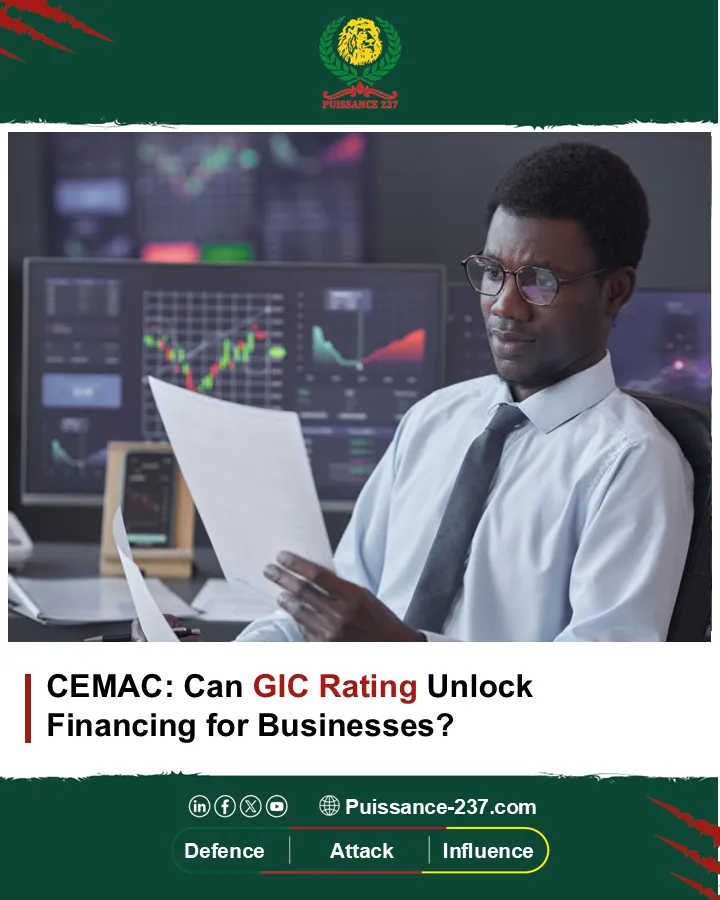
Will businesses in the CEMAC region soon be able to attract more investors? The approval of GIC Rating, the first credit rating agency authorised to operate in the regional market, opens up new possibilities. But between assessing risk and unlocking financing, several challenges remain.
A Rating Agency Alone Cannot Make an Economy Investment-Ready
The arrival of GIC Rating in the financial landscape of the Central African Economic and Monetary Community (CEMAC) addresses a genuine need: improving the assessment of risks associated with governments and businesses across the region. Until now, economic players have had to rely, among other sources, on international agencies to assess their creditworthiness. The approval of a locally established agency by the Central African Financial Market Supervisory Commission (COSUMAF) introduces an additional capacity for financial assessment within the regional economic environment. Yet the arrival of another agency does not automatically translate into greater access to financing. At the time of its first regional forum, held in Douala on 28 and 29 October 2026, GIC Rating had not yet assigned a rating to any issuer. Its actual contribution therefore remains to be demonstrated.
This situation highlights a fundamental distinction: assessing an entity’s ability to repay its obligations is not the same as providing it with the means to finance its development. A credit rating relies on financial and economic information, whose quality determines the relevance of the assessment. When a business lacks reliable accounts, sound governance or sufficiently transparent documentation, investors find it difficult to assess its financial position. Chapter XXIII of Power 237, entitled “Surveys, Ratings and Power”, specifically identifies the production of reliable, up-to-date information as a source of strategic power. For CEMAC businesses, this means treating financial information not merely as an accounting requirement, but as a strategic asset in the pursuit of investment.
An Agency’s Credibility Depends on Its Independence
GIC Rating is entering a market where its recognition will depend on more than regulatory approval or its knowledge of local economies. It must convince investors that its assessments are objective and comparable, regardless of the interests of the governments, companies or institutions it evaluates. This requirement is particularly important in economic environments where relationships between public and private stakeholders can be closely intertwined. A favourable rating obtained under pressure does not reduce risk; it merely conceals part of it. Conversely, a rigorous assessment, even an unfavourable one, can provide investors with a valuable reference point and encourage the issuer to address its weaknesses.
This is why independence constitutes a second strategic principle emphasised in Power 237. For GIC Rating, this must translate into transparent methodologies, sound analytical processes and the ability to resist political or commercial pressure. The issue extends beyond the agency’s reputation: it concerns the credibility of the entire regional financial market. If investors recognise the reliability of assessments produced within the region, local expertise can become a genuine competitive advantage. Otherwise, the agency’s approval will remain an institutional milestone with little influence on investment decisions.
Turning Investor Confidence into Investment
The third issue concerns where capital ultimately goes. Better risk assessments can help reassure investors, but they must also find well-structured projects and businesses capable of mobilising the resources offered. The challenge for CEMAC is therefore not simply to improve the assessment of issuers, but to develop a financial market capable of directing more capital towards the productive economy. Businesses in agribusiness, manufacturing, energy and technology need financing suited to their investment requirements and growth prospects. GIC Rating can help make their financial profiles more transparent, but it cannot create viable projects, strengthen their equity or guarantee their access to investors.
The recommendation in Power 237 to strengthen investor confidence takes on its full significance here. Confidence must be built on genuine improvements in corporate governance, financial transparency and an investment environment that supports long-term commitments. It also requires public authorities and regulators to develop financing mechanisms suited to businesses that are not yet able to access capital markets directly. COSUMAF’s proposed initiatives for 2026, including the expansion of its SME offering and the development of guarantee mechanisms, address this challenge. The objective is to build a coherent chain linking information, assessment, confidence and financing, rather than treating credit rating as an isolated solution.
Making Credit Rating an Instrument of Economic Sovereignty
The establishment of GIC Rating ultimately raises a broader question about Central Africa’s ability to master the instruments that shape how its economies are perceived. Developing regional expertise in credit rating makes it possible to deepen understanding of local realities and produce assessments based on greater knowledge of the economic environment. However, proximity must not lead to lenient ratings or an automatic opposition between regional and international agencies. The real ambition should be to develop credible expertise capable of engaging with financial markets and defending the quality of its assessments.
This is where the recommendations of Power 237 become particularly relevant. Reliable information, independent ratings and investor confidence are not three separate objectives. Together, they form the foundations of a collective capacity to mobilise capital in support of development. For CEMAC, the success of GIC Rating will therefore not be measured solely by the number of issuers it assesses, but also by the recognition of its analyses and their contribution to financing productive activities. The central challenge is whether the region’s economies can turn their potential into investment, and investment into economic power.