Cross-Border Security: The Lake Chad Challenge
24 November 2026
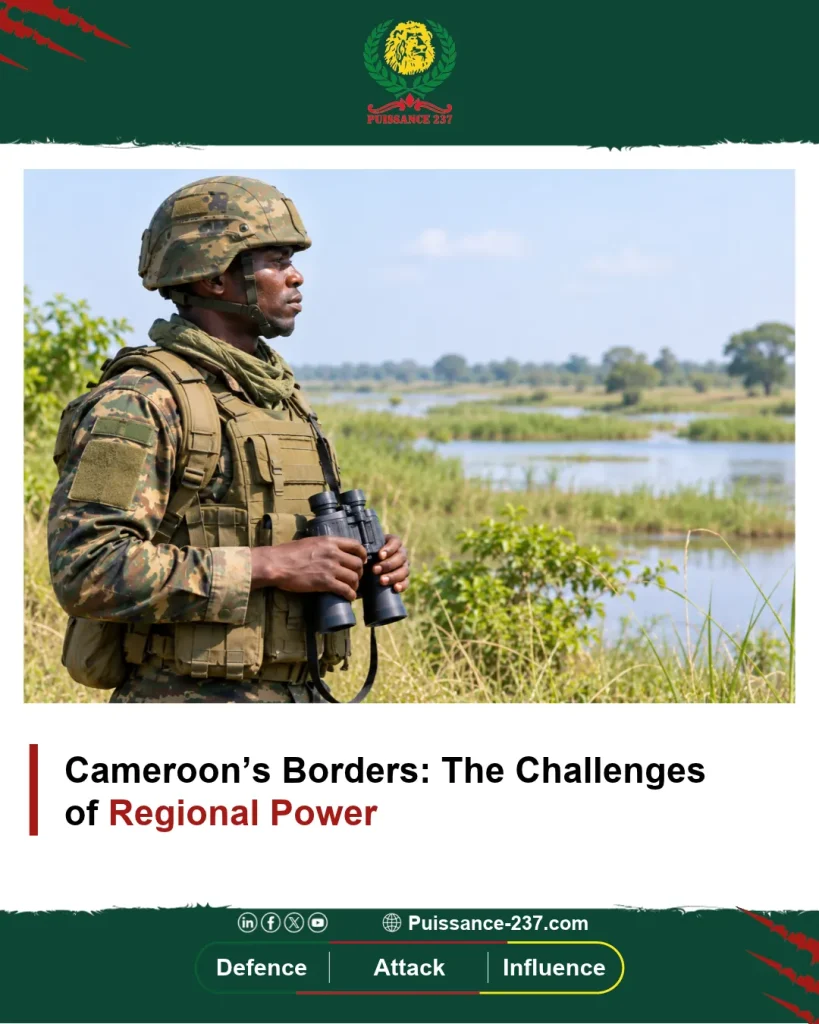
The announcement made in Abuja on 16 November 2026 of a regional mechanism authorising cross-border pursuit up to five kilometres into the territories of Nigeria, Cameroon, Chad and Niger marks a turning point in efforts to secure the Lake Chad Basin. This development highlights the need to combine territorial protection, operational initiative and good-neighbourly diplomacy to sustainably neutralise armed groups.
Adapting Military Doctrine to Asymmetric Conflicts
Announced in Abuja on 16 November 2026 by Nigerian Minister of Defence Christopher Musa, the new four-country arrangement between Nigeria, Cameroon, Chad and Niger authorises units operating on the ground to pursue Boko Haram and Islamic State West Africa Province (ISWAP) fighters up to five kilometres inside neighbouring territories. The aim is to eliminate the “border effect” that armed groups exploit to retreat, replenish their stocks and escape military pressure after incursions.
This decision directly echoes the analysis developed in Chapter XVI (“Armed Forces and Power”) of Part Four of Power 237, which examines the strategic role of national armed forces. Dr Guy Gweth argues that, in the face of contemporary asymmetric conflicts involving highly mobile non-state actors, national security can no longer rely on a strictly static posture behind administrative boundaries. The current developments around Lake Chad underscore the relevance of a doctrine capable of adapting continuously to emerging threats. For Cameroon, whose Far North Region is on the front line, the challenge is now to translate this regional opening into lasting security gains while safeguarding its sovereignty.
Strengthening the Security Apparatus and Safeguarding Territorial Integrity
From the perspective set out in Power 237, a state’s credibility rests above all on its ability to guarantee national security, domestic stability and territorial integrity. This defensive imperative requires sustained investment in the modernisation of equipment, the development of personnel skills and the strengthening of logistical capabilities.
The operational realities of Cameroon’s Far North Region fully bear out this approach: cross-border pursuit can only deliver tangible results if the national defence line remains robust and cohesive. The geography of the Lake Chad Basin, characterised by hard-to-reach islands and marshlands, calls for sustained material and technological superiority. As the book points out, military effectiveness is measured not merely by the ability to conduct a one-off operation, but by the capacity to hold secured areas over time, rigorously assess operations and prevent any security vacuum once deployed units have withdrawn.
Taking the Initiative Through Intelligence and Mobility
In the face of transnational terrorism, taking the initiative requires moving beyond a purely reactive approach. Effective intelligence capabilities and operational mobility make it possible to identify networks, anticipate their movements and restrict their opportunities to retreat.
The arrangement announced on 16 November 2026 is squarely in line with this proactive approach. By allowing forces to cross a five-kilometre border zone, the four Lake Chad countries aim to disrupt armed groups’ freedom of movement and undermine their supply networks. However, such operations can only be effective if they are underpinned by seamless intelligence-sharing, clear notification procedures between military headquarters and the systematic recording and analysis of operational lessons learned.
Projecting Influence Through Military Diplomacy and Engagement with Local Communities
The third lever highlighted in Dr Guy Gweth’s book concerns the projection of stability and the legitimacy of the military institution, both among citizens and on the regional stage. A professional, disciplined army committed to serving development strengthens national cohesion while enhancing the country’s credibility among its partners.
In the context of cross-border operations, these two dimensions take on decisive importance:
- Engagement with local communities: The presence of foreign units within a five-kilometre border area requires strict enforcement of rules of engagement and responsible communication in order to preserve the trust of border communities. Security operations must be accompanied by civilian and development initiatives.
- Regional cooperation: Active engagement in collective mechanisms, building on the experience of the Multinational Joint Task Force (MNJTF), illustrates the role as a security hub highlighted in Power 237. Military diplomacy thus becomes an instrument of influence that strengthens Cameroon’s position at the heart of the regional peace architecture.
From Border Control to Regional Leadership
The effectiveness of the announced mechanism will depend less on the depth of the pursuit zone than on the quality of coordination among the states concerned. Intelligence-sharing, clarification of rules of engagement, respect for national sovereignty and the protection of local populations will be decisive conditions for its implementation.
For Cameroon, lasting security in the Far North goes beyond the military dimension alone. It is essential to the stability of border areas, the continuity of economic exchanges and the country’s credibility within regional security arrangements. The ability to combine operational effectiveness, territorial control and diplomatic cooperation will be crucial to turning this new momentum into a genuine source of stability and regional power by 2050.
The Editorial Team