Can Regional Connectivity Accelerate the Conquest of African Markets?
22 November 2026
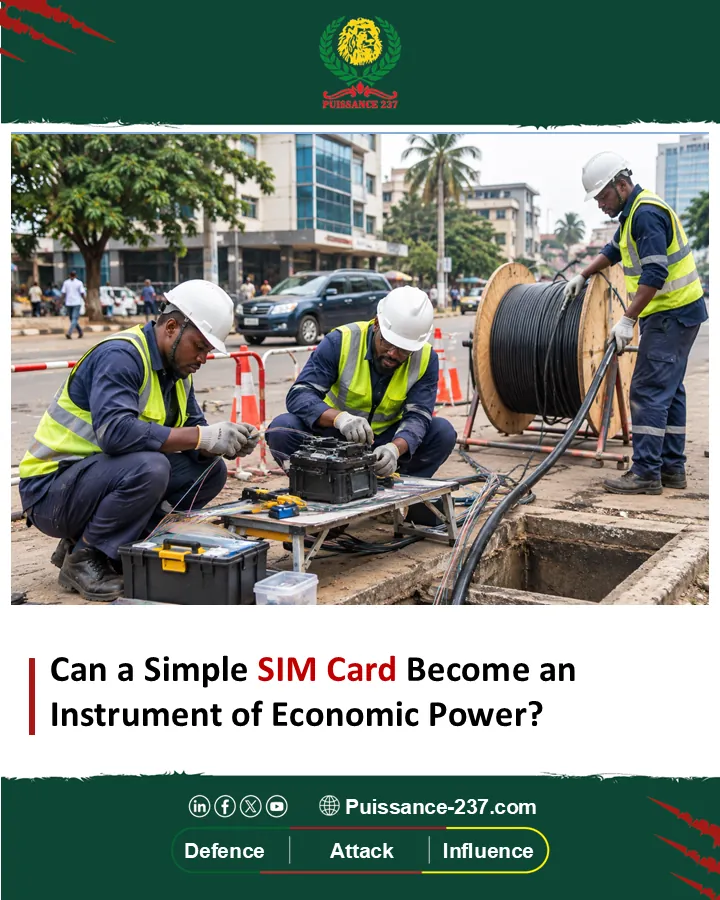
Cameroon and Gabon share a border, yet their economic exchanges still face less visible barriers. Since 10 November 2026, four telecommunications operators have changed the landscape by removing additional roaming charges. Behind this development lies a far more ambitious challenge: turning connectivity into a driver of economic expansion and regional power in Central Africa.
Reducing Digital Barriers to Facilitate Trade
Since 10 November 2026, subscribers of MTN Cameroon and Orange Cameroun, as well as those of Airtel Gabon and Moov Africa Gabon Telecom, have been able to use their mobile services in the partner country without the additional charges traditionally associated with international roaming. The arrangement covers voice calls, SMS and mobile internet, with services billed at local rates.
For traders, transport operators and businesses operating on both sides of the border, this measure facilitates business coordination and reduces certain operating costs. However, it is not enough to create a fully integrated regional market. Regulatory barriers, difficulties with cross-border payments and inadequate infrastructure continue to hinder trade. The real challenge is therefore to incorporate this progress into a broader economic expansion strategy.
Turning Interconnection into an Instrument of Commercial Expansion
In Power 237, Dr Guy Gweth advances a vision of national power based on the ability to organise national resources, defend economic interests and expand into new markets. Applied to digital integration, this perspective calls on Cameroon to look beyond the mere reduction of communication costs. Public authorities and business associations should identify the sectors most likely to benefit from this development, particularly trade, transport, logistics, financial services and tourism. Strategic monitoring of neighbouring markets would help identify business opportunities, potential partners and regulatory developments.
This approach must also translate into practical support for Cameroonian businesses. Small and medium-sized enterprises should strengthen their command of digital tools, commercial platforms and cross-border payment solutions to explore opportunities and expand their operations in Gabon and other markets across the subregion. The objective is to turn reduced communication barriers into a competitive advantage by facilitating access to customers, commercial negotiations and the development of sustainable partnerships.
Building Genuine Regional Digital Sovereignty
However, removing additional roaming charges does not resolve the fundamental issue of control over digital infrastructure. Regional connectivity also depends on fibre-optic networks, transmission capacity, data centres and Internet exchange points. Under the Central African Backbone project, the International Telecommunication Union has notably encouraged infrastructure sharing and cooperation among Central African states to reduce international connectivity costs.
Cameroon should therefore champion a regional strategy built around the interconnection of national networks, the development of Internet exchange points, stronger data-hosting capabilities and the protection of critical infrastructure. Better coordination among regulators would also help harmonise rules and facilitate data flows. Digital sovereignty does not mean isolation. It means having the capabilities required to negotiate connectivity arrangements, protect strategic data and ensure the continuity of essential services.
Moving from Bilateral Agreements to a Continental Strategy
In Power 237, collective intelligence is presented as a foundation of national capacity for action. At the regional level, this approach requires closer cooperation between government institutions, regulators, telecommunications operators, businesses and financial institutions. Cameroon should promote a permanent strategic monitoring mechanism for digital integration, tasked with tracking the implementation of agreements, identifying technical and regulatory obstacles, and assessing the actual economic benefits of connectivity. Signing an agreement must not be confused with implementing it effectively.
By 2050, the ambition should be to build an African economic space in which businesses can communicate, trade, invest and expand their services with fewer cross-border constraints. To achieve this, Cameroon must combine the defence of its digital interests, infrastructure development, regional cooperation and commercial expansion. The agreement with Gabon represents progress, but its true value will depend on the ability of both countries to make it the starting point for deeper economic integration.
The Editorial Staff