Dangote in Cameroon: From Cement to Oil Refining
30 October 2026
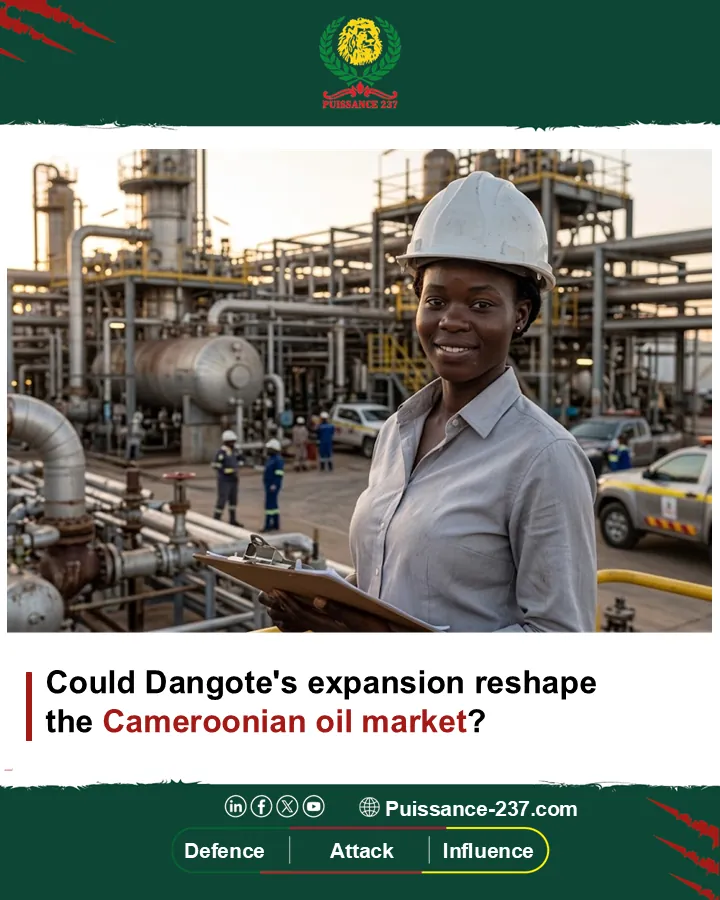
Cement was only the first step. In Cameroon, Dangote is now preparing to enter the oil infrastructure sector, where both supply costs and control over distribution channels are at stake.
A New Subsidiary, Broader Ambitions
Incorporated on October 28, 2026, Dangote Oil & Gas Cameroon SA provides the Nigerian group with a legal framework to expand its activities beyond cement. Based in Douala-Bonanjo, with a declared operations centre in the Kribi industrial zone, the company is headed by Bertrand Mbouck, who also leads Dangote Cement Cameroon. Its corporate purpose covers storage, transportation, distribution, refining and petrochemicals, among other activities. These operations remain subject to the necessary regulatory approvals, and no implementation timetable has been announced.
This development comes ahead of a supply agreement between the National Refining Company (SONARA), Dangote Industries Limited and MRS Holding. Announced on October 29, the agreement provides for the Dangote refinery in Nigeria to supply approximately 50% of Cameroon’s imported petroleum product requirements over a 30-month period. MRS Holding is responsible for transporting the cargoes to SONARA’s facilities in Limbe. There is no indication that the newly established Cameroonian subsidiary will be directly involved in implementing this contract. Nevertheless, the two developments point to a shift worth monitoring: Dangote could play an increasingly significant role in Cameroon’s fuel supply while preparing for a broader presence in the country’s oil infrastructure.
The Real Issue: Who Will Control the Infrastructure?
Cameroon is not starting from scratch. The Cameroon Petroleum Depots Company (SCDP) already operates petroleum storage infrastructure and is preparing a hydrocarbon terminal in Kribi. A project led by CSTAR, a company owned by Ariana Energy, Tradex and the National Hydrocarbons Corporation (SNH), also provides for additional storage capacity in the area. Meanwhile, Dangote has presented the authorities with a storage project that could be connected to a pipeline network. However, no publicly available information establishes a link between these different projects. This situation raises a question that goes beyond the multiplication of investments: how can new infrastructure be integrated with existing capacity to secure supplies and reduce logistics costs? Chapter XIX of Power 237, entitled “Green Energy and Power,” highlights the importance of energy infrastructure in Cameroon’s path towards greater national power by 2050.
Applied to the oil sector, this analytical framework calls for an assessment of each project’s contribution to energy security, industrialisation and control over supply flows. The priority should not be to favour an operator simply because of its size, but to evaluate the capacity it brings, the investments it actually delivers and the terms governing access to its infrastructure. For public authorities, this means assessing projects against market needs, preventing costly duplication and measuring the expected gains in storage, transportation and distribution.
Competition That Could Reshape the Market
Cameroon’s oil sector already includes established operators such as TotalEnergies, Tradex, MRS, Neptune Oil and Ola Energy. Dangote’s potential entry into distribution would therefore not take place in an untapped market. It could alter the balance of power between suppliers and distributors, particularly if the group decides to develop its own infrastructure and commercial networks.
For decision-makers, the challenge is twofold. First, effective competition must be preserved so that the arrival of a new player translates into better supply conditions rather than greater market concentration. Second, investments must contribute to the development of domestic capabilities. Maintenance, transportation, logistics and technical services could create opportunities for Cameroonian businesses, provided they have the skills and resources required to meet the sector’s demands. This prospect aligns with the industrial ambition set out in Power 237. The presence of a major international group does not automatically strengthen the economic power of its host country. The benefits depend, among other things, on local business participation, skills development, job creation and the value retained within the national economy. These outcomes must be actively pursued and measured rather than taken for granted.
Negotiating to Preserve Room for Manoeuvre
The supply agreement announced with Dangote adds another dimension to the issue. In 2025, Cameroon imported 2.02 million tonnes of refined petroleum products, at a total cost of CFAF 788.4 billion. Dependence on imports since SONARA ceased operations in 2019 makes cost control particularly important. According to information published by EcoMatin, the negotiated arrangement is intended to improve control over purchasing and transportation costs through a pricing mechanism that distinguishes the price of the products from the costs associated with their delivery. The actual savings, however, will need to be verified once the contract is implemented. An agreement with a major supplier does not, in itself, guarantee a reduction in the country’s petroleum import bill.
This is where smart power, within the analytical framework of Power 237, becomes particularly relevant: it means leveraging external partnerships without relinquishing the ability to negotiate. Cameroon must be able to compare offers, monitor costs, maintain alternative supply options and assess the terms of access to infrastructure. Preserving this room for manoeuvre is essential to prevent a solution intended to reduce one dependency from creating another.
Turning Dangote’s Expansion into National Power
The establishment of Dangote Oil & Gas Cameroon SA guarantees neither the construction of a refinery in Cameroon nor the implementation of every activity listed in its corporate purpose. It nevertheless opens the door to a broader presence for the group in a strategic sector, at a time when its role in supplying the domestic market could grow.
For Cameroon, the priority is to define the expected outcomes: more secure deliveries, lower logistics costs, the development of useful infrastructure and greater participation by domestic businesses. Monitoring these outcomes will make it possible to assess the actual contribution of partnerships to the country’s economic power. The perspective offered by Power 237 therefore invites us to look beyond Dangote’s expansion alone. The real issue is Cameroon’s ability to leverage this presence to strengthen its infrastructure, develop its skills base and preserve its freedom of decision-making. Foreign investment becomes a lever of national power when the host country has the means to negotiate its terms, measure its benefits and transform commercial opportunities into lasting capabilities.
The Editorial Staff