
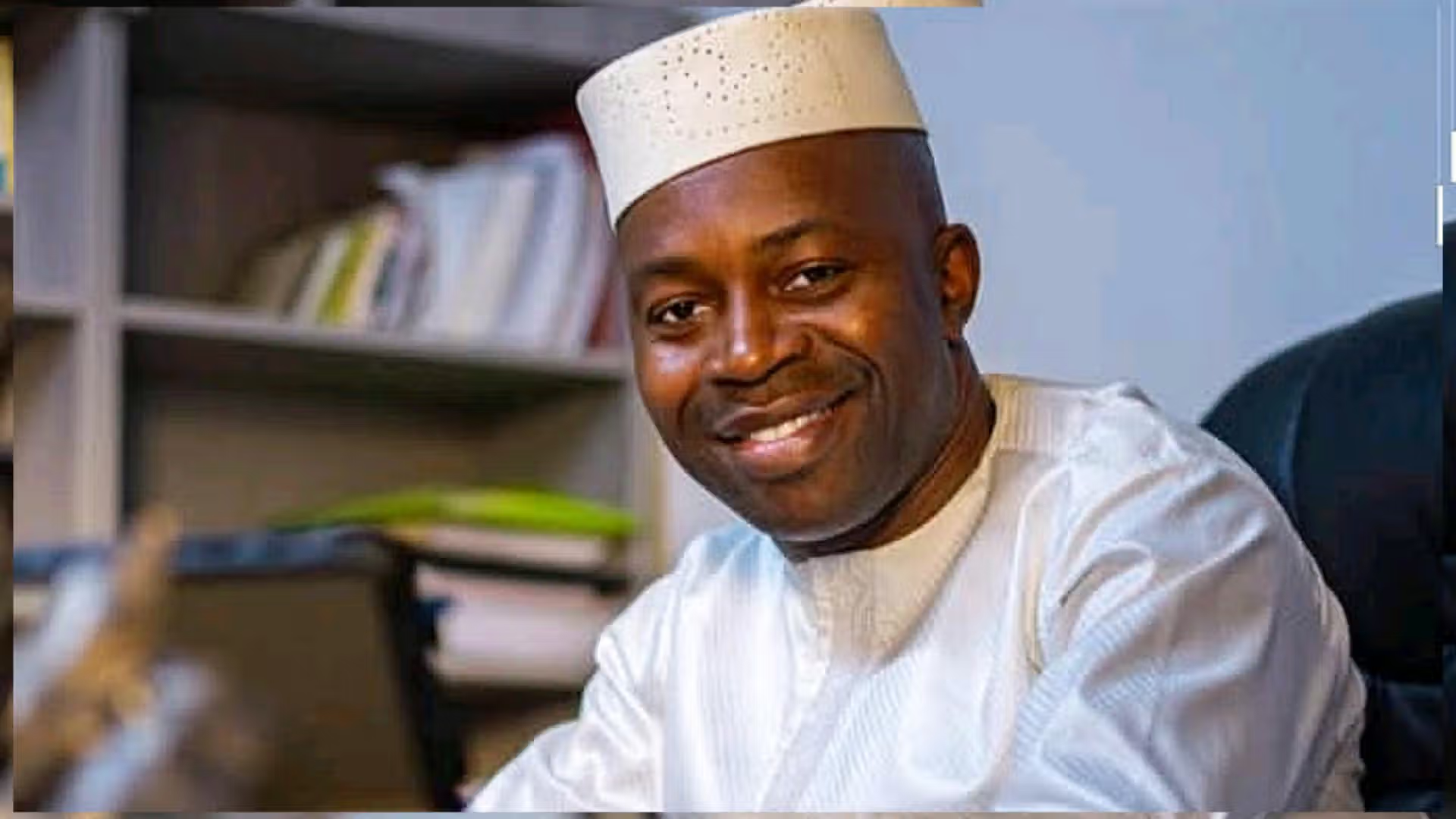
This article is part of a series assessing the influence of Power 237, a book published in January 2025, on the policy platforms of the twelve candidates in the 12 October 2025 presidential election. Based on the analytical framework of the African Centre for Competitive Intelligence (ACCI) — the hard, soft and smart power triptych — this impartial analysis examines the extent to which the national power strategy proposed by Dr Guy Gweth for the 2025–2050 horizon has shaped each candidate’s vision. In alphabetical order, this focus turns to Serge Espoir Matomba, First Secretary of the United People for Social Renovation (PURS), and his political programme entitled LIBERTY.
Strategic Alignment: Identity and National Cohesion
Serge Espoir Matomba’s programme is structured around four key priorities: national identity, unity, political sovereignty, and institutional reform. His emphasis on a decolonised and patriotic education illustrates a desire to strengthen soft power, in line with Power 237, which identifies human capital and culture as key levers of national power. The promotion of enlightened citizenship and the reconciliation of historical memories are presented as tools of social cohesion, designed to consolidate national unity and foster a climate of justice and equity.
Convergence with the Theses of Power 237: Unity and Decentralisation
In the area of unity, Serge Espoir Matomba advocates for “cohesion in diversity,” linking social justice to the reconciliation of colonial legacies. This approach aligns directly with the recommendations of Power 237, which underscores the importance of inclusive dialogue and citizen mobilisation to transform the state and strengthen national power. His emphasis on effective decentralisation and land reform reflects the integration of hard and smart power principles, bringing decision-making closer to citizens and promoting balanced economic development.
Political Sovereignty and Institutional Reform
The third and fourth pillars of Matomba’s programme centre on sovereignty and institutional modernisation. He proposes holding a constitutional referendum in 2026 to rebuild institutions and reinforce the separation of powers. This vision is consistent with Chapter XIII of Power 237, which highlights the rule of law and democracy as fundamental drivers of national power. By aiming for transparent, representative, and inclusive governance, the candidate combines hard power (institutional reform), soft power (citizen mobilisation), and smart power (balanced public policies).
Cultural Capital and Economic Autonomy
Rooted in pan-Africanist, nationalist, and independence-oriented ideals, Serge Espoir Matomba’s programme places strong emphasis on cultural sovereignty and economic development. The valorisation of local resources, the promotion of national culture, and the strengthening of local capacities reflect the logic of Power 237, which identifies cultural influence and economic autonomy as key pillars for building sustainable national power.
Conclusion
The comparative analysis shows that Serge Espoir Matomba’s LIBERTY programme shares clear thematic convergences with the theses of Power 237. The integration of national cohesion, historical reconciliation, institutional reform, and economic sovereignty reflects a genuine appropriation of strategic power concepts, confirming the book’s tangible impact on the design of a structured and ambitious political vision for Cameroon.
Editorial Team