
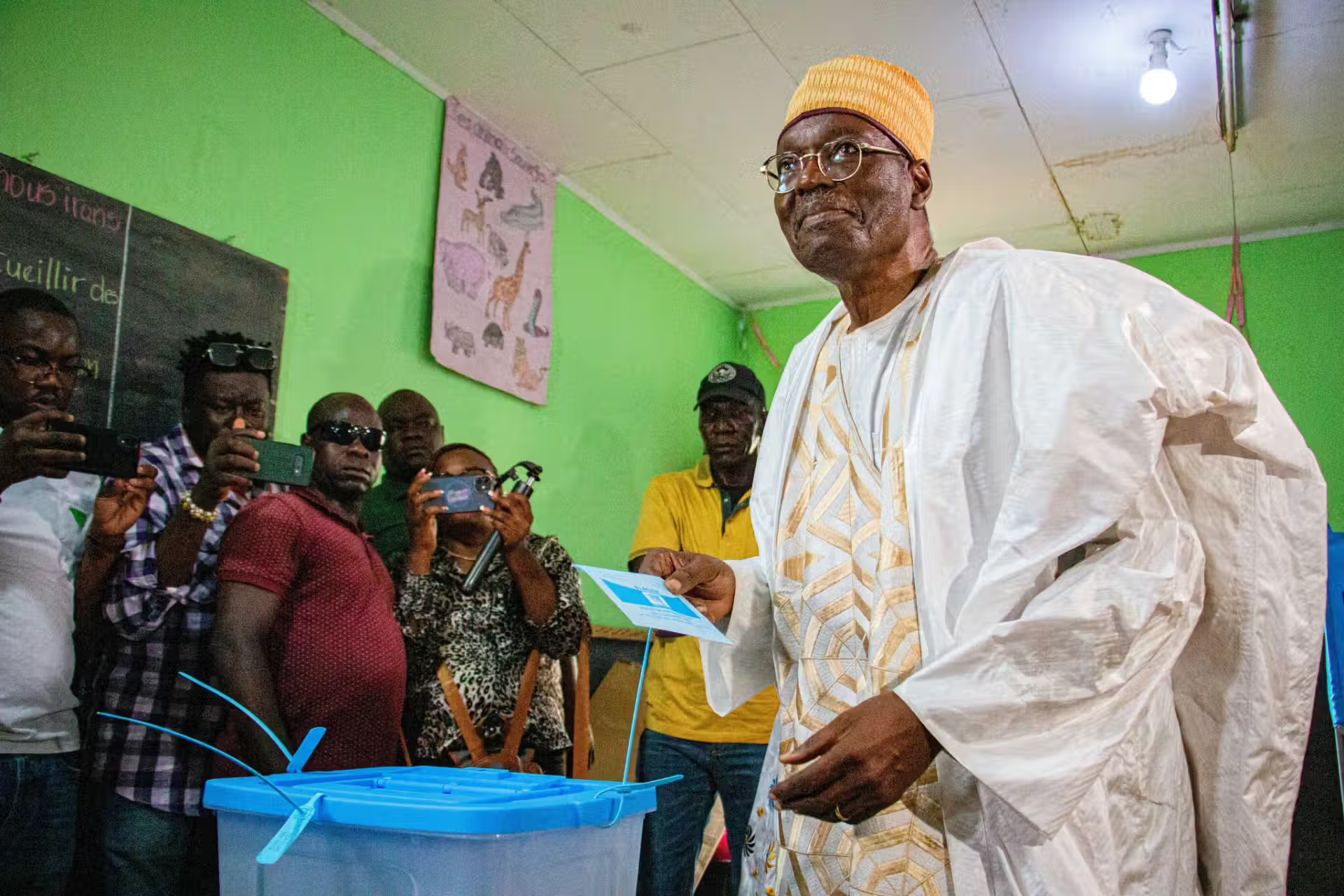
In January 2025, Dr Guy Gweth published Power 237, a strategic roadmap for Cameroon through 2050. Nine months later, twelve candidates went head-to-head in the presidential election. How much of this vision had they absorbed into their programmes? The editorial team of Power 237 analyses, candidate by candidate, the influence of the book using the framework of the African Centre for Competitive Intelligence (ACCI): hard, soft, and smart power. Today, we focus on Issa Tchiroma Bakary, candidate of the Rassemblement pour la République (RPR), and his Transition Manifesto.
Defence and Stability: A Strategic Foundation
Issa Tchiroma Bakary’s Transition Manifesto lays out a roadmap for sustainable renewal, structured around six priority axes. At its core is a commitment to national security and stability. The programme calls for an inclusive national dialogue and a thorough reform of the military, reflecting Chapter XVI of Power 237, which stresses that “the army, as the guarantor of national security and territorial integrity, plays a crucial role in building power.”
The manifesto reimagines the military not just as a protector of the nation, but as a catalyst for economic and industrial development. It integrates all three dimensions of strategic power: hard power through military capacity, soft power via inclusive dialogue, and smart power by mobilising non-state actors such as businesses, universities, and media.
Building the Economy: Foundations for Growth
On the economic front, the manifesto envisions an industrial and digital economy. Key initiatives include tax reforms, the creation of special economic zones, and targeted investments in agriculture, energy, and local industry. These measures align closely with the pillars of Power 237: harnessing internal resources, fostering technological innovation, and promoting strong, sustainable economic growth. By emphasising a transition toward a productive and digital economy, the programme echoes the book’s vision of economic sovereignty and technological integration as levers of strategic power.
Human Capital and National Cohesion
Issa Tchiroma Bakary places people at the centre of his platform. Proposals such as free education up to secondary level, universal healthcare, and initiatives to strengthen national cohesion reflect Power 237’s emphasis on human capital, patriotism, and citizen engagement as fundamental levers of national strength. By linking social development to national power, the manifesto demonstrates that stability and growth are inseparable from an empowered, unified citizenry.
Conclusion
A close analysis shows that Issa Tchiroma Bakary’s Transition Manifesto closely mirrors the principles outlined in Power 237. From security reform to economic renewal and investment in human capital, the programme reflects a balanced integration of hard, soft, and smart power. The influence of the book is clear, shaping a vision for Cameroon that combines stability, inclusivity, and long-term development.
Editorial Team