
This article is part of a series analysing the influence of Power 237, published in January 2025, on the political and social agendas of the twelve candidates contesting the 12 October 2025 presidential election. Using the analytical framework developed by the African Centre for Competitive Intelligence (ACCI) — the hard, soft and smart power triptych — this impartial study examines how deeply the national power strategy proposed by Dr Guy Gweth for 2025–2050 has shaped each candidate’s vision.
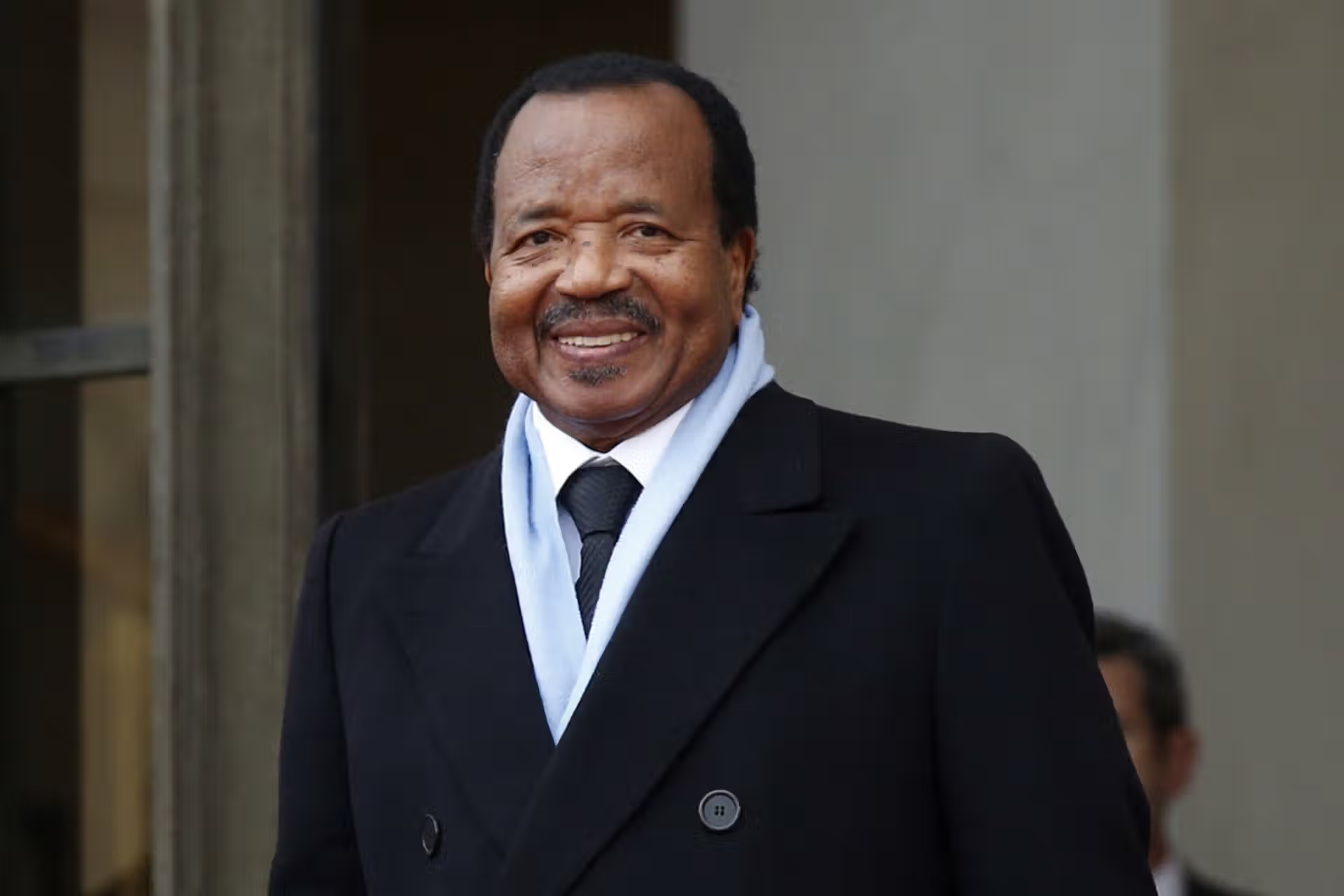
In alphabetical order, this focus turns to Paul Biya, candidate of the Rassemblement Démocratique du Peuple Camerounais (RDPC), and his programme for an additional seven-year term.
Strategic Alignment: Security and Stability
Paul Biya’s programme places clear emphasis on security, stability, and population resilience. Strengthening defence forces against Boko Haram, protecting citizens from organised crime, and deploying elite units in sensitive zones correspond directly to the hard power dimension defined in Power 237.
The candidate underlines the central role of security as the foundation of national strength, particularly in border regions and areas affected by humanitarian or climate crises.
Convergence of Economic and Infrastructure Pillars
Paul Biya’s manifesto places infrastructure and economic development at the heart of his agenda, with major strategic road projects (Mora–Dabanga–Kousséri, Ngaoundéré–Garoua) and efforts to boost the energy sector through the Nachtigal dam and the expansion of solar power plants.
These initiatives align with the recommendations of Power 237, which highlights infrastructure and energy as key levers of sovereignty and economic growth. His approach combines hard power (physical investments) with smart power (stimulating local economies and tourism), aiming to maximise their impact on national competitiveness.
Human Capital and Social Cohesion
The incumbent president also stresses the inclusion of young people and women by promoting employment, entrepreneurship, and female empowerment. The restructuring of the National Employment Fund, the expansion of vocational training, and the creation of financing mechanisms for local projects are all consistent with the human capital logic presented in Power 237.
These measures express a desire to unlock citizens’ social and economic potential, thereby reinforcing national cohesion and resilience in the face of crises.
Conclusion
This comparative analysis shows that Paul Biya’s programme shares significant thematic convergences with the ideas advanced in Power 237. From enhanced security to investment in human capital and infrastructure, his platform demonstrates an integration of strategic power concepts. The book has clearly influenced the formulation of a policy framework that combines stability, development, and inclusion — confirming the tangible impact of Power 237 on Cameroon’s strategic development agenda.
The Editorial Team