
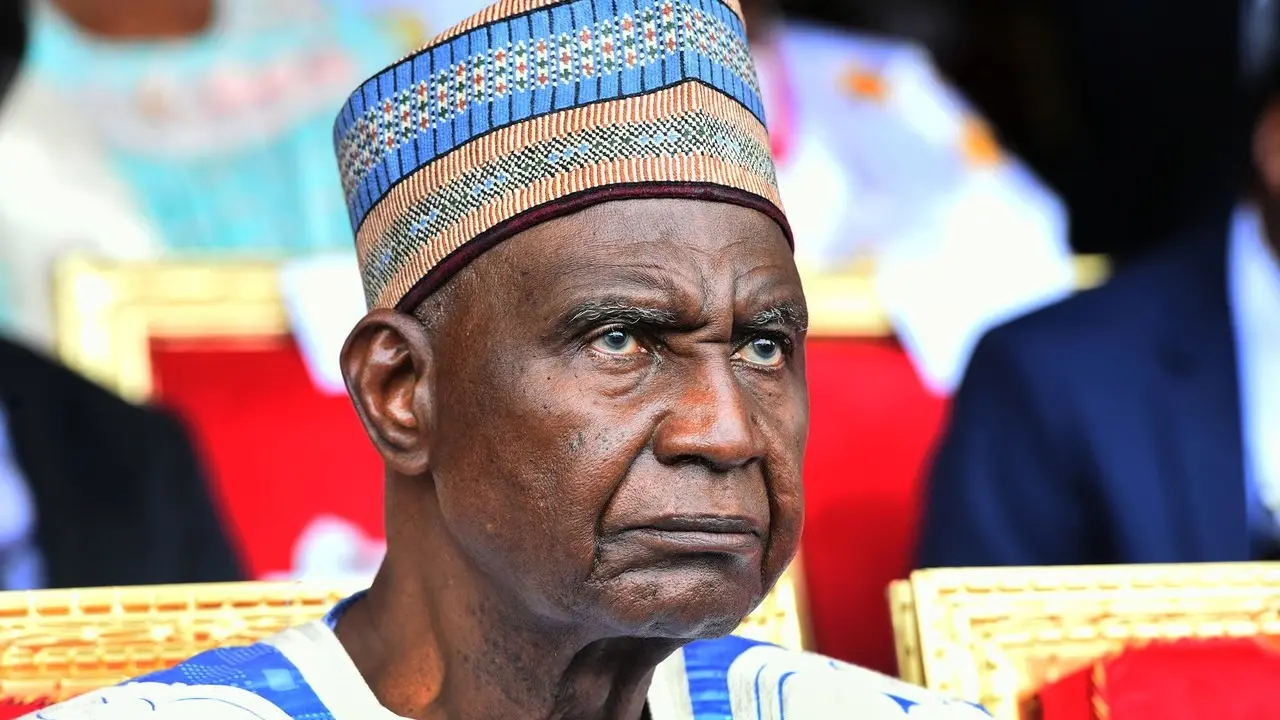
This article is part of a series aimed at assessing the influence of Power 237, a book published in January 2025, on the policy platforms of the twelve candidates contesting the 12 October 2025 presidential election. Based on the analytical framework of the African Centre for Competitive Intelligence (ACCI) — the hard, soft and smart power triptych — this impartial analysis explores the extent to which the national power strategy proposed by Dr Guy Gweth for the 2025–2050 horizon has shaped each candidate’s agenda. In alphabetical order, this focus turns to Bello Bouba Maïgari, candidate of the Mouvement pour la Libération du Cameroun (MLC), and his programme Pact for Building the Future Together.
Strategic Alignment: National Unity and Reconciliation
Bello Bouba Maïgari’s programme presents itself as a roadmap to restore national unity and strengthen democracy. It emphasises inclusive dialogue to resolve the Anglophone crisis and symbolic actions of reconciliation, such as granting amnesty to political detainees and paying tribute to historical figures of independence.
This orientation directly echoes Chapter XIII of Power 237, which stresses that the rule of law and democracy are indispensable pillars for building lasting national strength. The approach — combining hard power (institutional reform, strengthening Parliament and the judiciary), soft power (inclusive dialogue and promotion of national cohesion), and smart power (integrated public policies for unity and governance) — clearly illustrates the book’s influence on the candidate’s strategy.
Convergence of Economic and Social Pillars
The economic programme is built around a recovery plan of 60,000 billion CFA francs over seven years, targeting double-digit growth and massive job creation. The proposals include modernising infrastructure (roads, water, electricity), developing the digital economy, and making targeted investments in health, education, and vocational training.
These objectives align with the recommendations of Power 237 on mobilising domestic resources, stimulating innovation, and promoting strong, sustainable economic growth. The integration of anti-corruption measures and the rationalisation of public spending also reflect the adoption of the principles of transparency and governance promoted by the study.
Human Capital, Democracy and Inclusion
On the social and institutional front, the programme provides for constitutional reforms, limits on presidential terms, guarantees of free and representative elections, judicial independence, and effective decentralisation. Lowering the voting age, reforming the Electoral Code, and reopening debate on federalism reflect a desire to involve all citizens in public life. These measures echo the lessons of Power 237 on the importance of social cohesion, civic participation, and human capital as key drivers of national power.
Conclusion
The comparative analysis reveals that Bello Bouba Maïgari’s programme shows a strong thematic correlation with the ideas advanced in Power 237. His platform demonstrates a clear integration of strategic power concepts — from national unity to institutional reform and investment in human capital and infrastructure — confirming the tangible influence of the book on the formulation of an inclusive and sustainable political development agenda for Cameroon.
The Editorial Team