
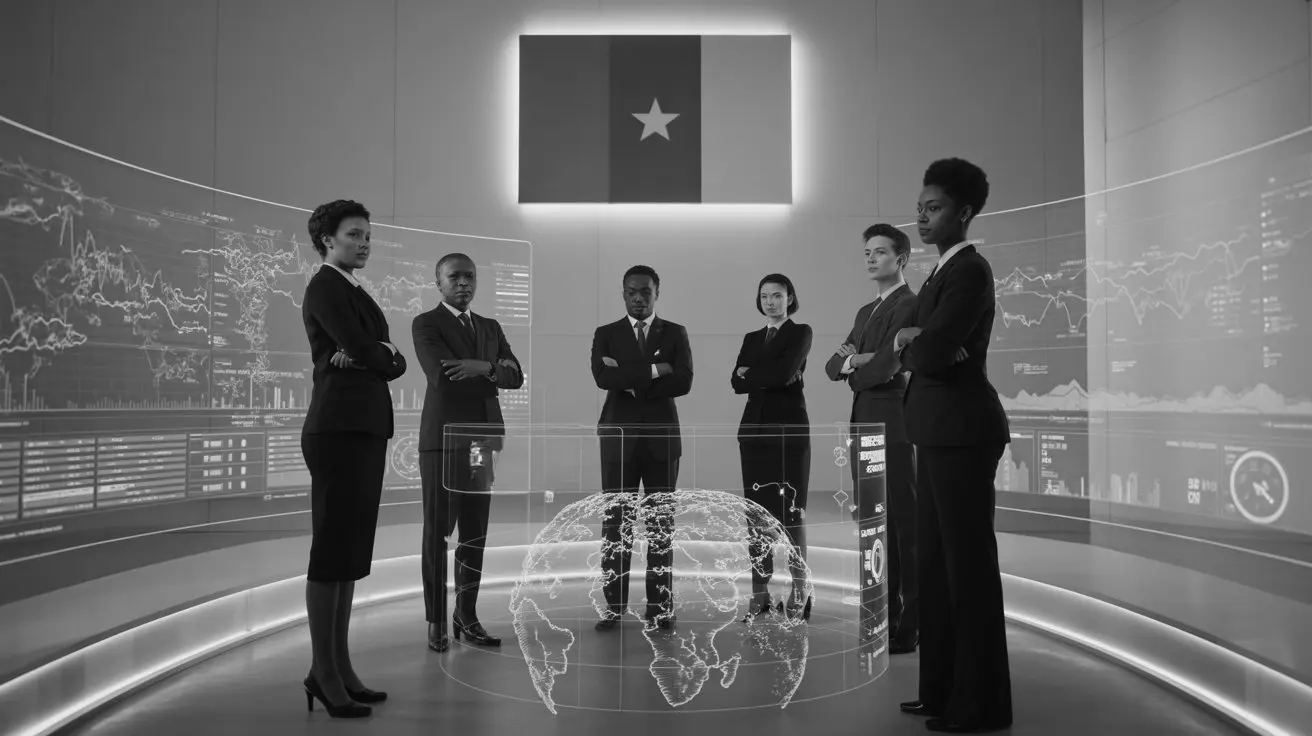
Cameroon, a strategic and economic crossroads in Central Africa, is steadily positioning itself as a stronghold of competitive intelligence. Once considered a field reserved for global powers, competitive intelligence is now gaining traction across Cameroonian businesses, public institutions, and educational establishments. This shift marks a major milestone in the country’s drive for sovereignty and national competitiveness—an ambition championed by Dr Guy Gweth, author of the best-selling Power 237, who envisions Cameroon as an African power by 2050 through a strategy rooted in defence, offence, and influence.
This transformation is grounded in a sharp, operational understanding of the discipline as defined by the African Centre for Competitive Intelligence (ACCI):
“Competitive intelligence is a mindset, a process, and a system for the legal, rapid and secure questioning, collection, processing, analysis and transmission of strategic intelligence to support decision-making in competitive, uncertain or hostile environments.”
The private sector: from uncertainty to strategic command
In the private sector, a growing awareness of the urgency of competitive intelligence is reshaping business practices. Until recently, many SMEs and large enterprises operated blindly, hindered by opaque markets, unfair competition and external interference. Since Dr Gweth’s landmark conference at GICAM (now GECAM) on 8 November 2019 and the subsequent strategic partnership between ACCI and GICAM, a wave of professionalisation has swept across corporate intelligence efforts.
Executive teams increasingly recognise strategic monitoring as a core driver of growth. Specialist firms such as Knowdys Cameroon—leaders in the field—now provide services such as stakeholder mapping, opportunity analysis, and information asset protection. In this new landscape, the savvy Cameroonian business is no longer a besieged outpost, but an advanced observation post—capable of identifying weak signals and launching targeted intelligence offensives. Survival in today’s global economy demands a constant information war, where each verified data point is a weapon in the decision-making arsenal.
Government: from reactive to strategic
At the state level, Cameroon is undergoing a profound rethinking of its approach to national security and prosperity. Acknowledging that economic strength is inseparable from control of strategic information, public institutions are now developing internal units dedicated to competitive intelligence. This move signals a shift from passive defence to proactive strategy—one that identifies comparative advantages, promotes national interests on the world stage, and anticipates economic shocks.
This strategic realignment—what some call the “militarisation” of economic thought—reflects a desire to equip the state with the tools of economic warfare, transitioning from reaction to anticipation and influence. Competitive intelligence is emerging as a vital pillar of both diplomacy and national development policy, as reflected in the upcoming national strategy and public policy on competitive intelligence.
Education: training the officers of economic warfare
Cameroon’s academic and professional training institutions have a pivotal role to play. Training future leaders in competitive intelligence is crucial to building a homegrown corps of experts capable of conducting informational battles. While specialised programmes are emerging—with modules on competitive monitoring, data protection, lobbying and influence—they would benefit from stronger grounding in local realities and cutting-edge methodologies.
Students must not only master traditional economic analysis but also learn open-source investigation techniques, cybersecurity fundamentals, and predictive strategy—drawing on ACCI’s approach. In doing so, these institutions will become true academies of economic warfare, equipping the next generation to defend national interests and break new ground in emerging markets.
ACCI and DGRE: redefining Cameroon’s competitive intelligence architecture
After a decade of relentless work—through knowledge production, capacity building and the creation of tailored intelligence and due diligence systems—the ACCI has achieved unprecedented recognition. Its crowning achievement is a strategic partnership with Cameroon’s defence and security services.
Today, Dr Guy Gweth, the continent’s leading figure in competitive intelligence and President of the ACCI, serves as official instructor to the Directorate General for External Research (DGRE). Far from symbolic, this appointment marks a historical turning point. Dr Gweth is now responsible for training DGRE personnel in the methods and tools of economic warfare, grounded in ACCI’s proven model: defend, attack, influence.
This strategic alliance, which fuses the academic and operational expertise of ACCI with the state’s enforcement capabilities, now shapes the spirit, substance, and trajectory of Cameroon’s competitive intelligence. It signals a new era: one in which Cameroon is no longer a passive observer in the global economic arena, but a strategic actor—capable of defending its gains, seizing new opportunities, and asserting its influence over its own economic destiny.
This is the age of sovereignty through knowledge and action.
— Editorial Team