
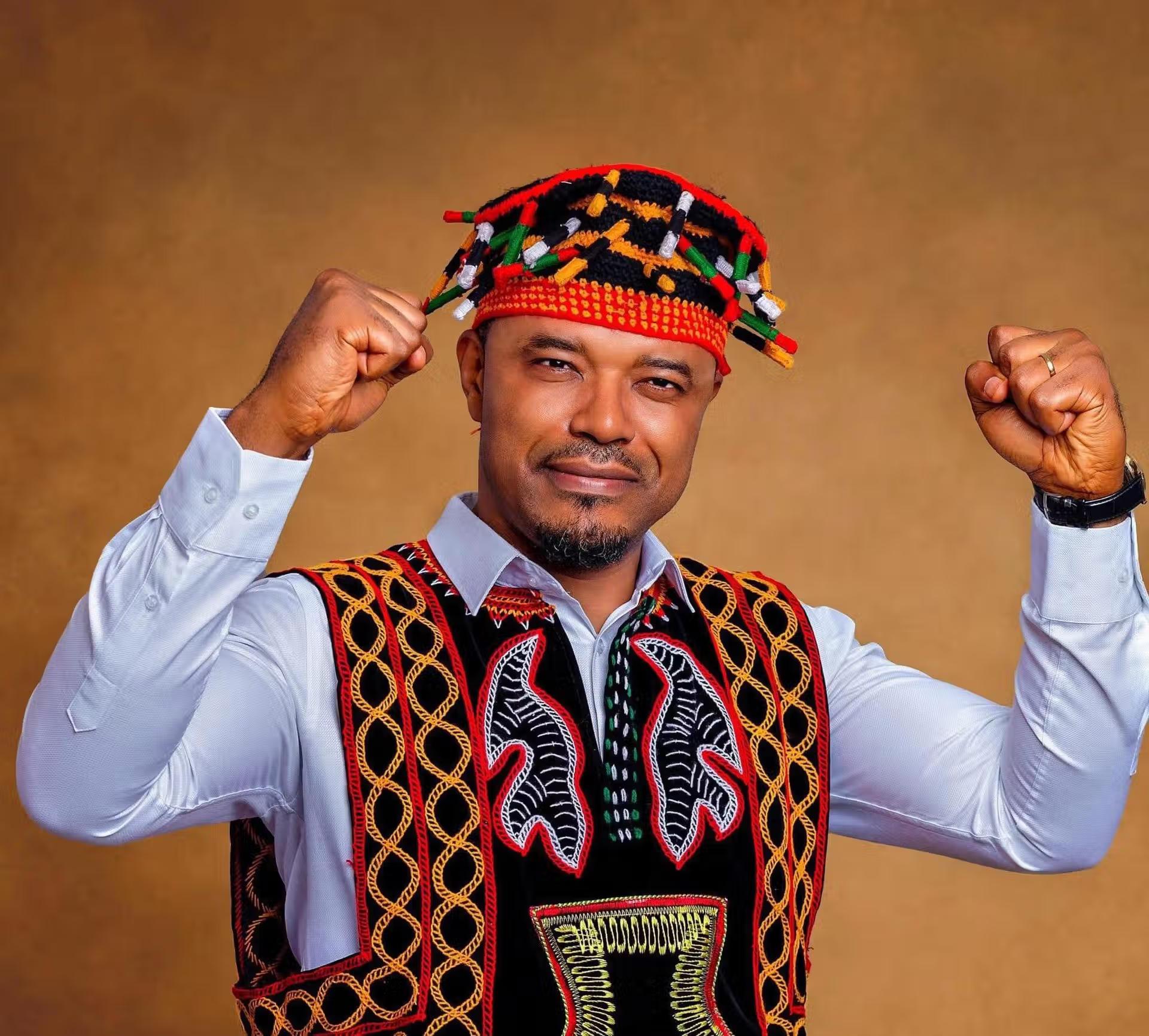
Since its publication in January 2025, Power 237 has left a mark on Cameroon’s political scene. Drawing on the hard, soft and smart power framework of the African Centre for Competitive Intelligence (ACCI), this series explores how Dr Guy Gweth’s vision for 2025–2050 shaped the candidates’ programmes. This article focuses on Ateki Seta Caxton, the Liberal Alliance Party (PAL) candidate, and his political programme unveiled on 1 August 2025 in Yaoundé.
Strategic Alignment: National Unity and Inclusive Dialogue
The PAL programme placed national unity at the heart of its political vision. This orientation resonates with Chapter XIII of Power 237, which highlights that social cohesion and internal stability are essential pillars for building sustainable power. Ateki Seta Caxton advocated for inclusive and constructive dialogue to ease intercommunal tensions and strengthen national cohesion. The plan also proposed a national reconciliation programme aimed at fostering exchange and a shared sense of belonging across the country.
Resolving the Anglophone Crisis: Peace and Autonomy
The resolution of the Anglophone crisis stood out as a strategic priority in the programme. The candidate committed to promoting a peaceful and consultative approach to restore peace and normalcy in the affected regions while preserving national integrity. This stance reflected the soft power principle of Power 237, which emphasises internal diplomacy and the mobilisation of non-state actors to stabilise the nation and build an environment conducive to development.
Economic Sovereignty and Monetary Transition
In the economic sphere, Ateki Seta Caxton proposed Cameroon’s withdrawal from the CFA franc zone and a gradual disengagement from the International Monetary Fund (IMF). His goal was to establish a new national currency and design economic policies tailored to local needs. This orientation mirrored the recommendations of Power 237 concerning economic sovereignty, control over national resources, and the reduction of external dependence as levers of strategic power.
Human Capital and the Fight Against Youth Unemployment
The PAL programme placed strong emphasis on youth development, with measures to stimulate entrepreneurship, enhance vocational training, and support startups. This priority reflected the logic of Power 237, which identifies human capital as a vital driver of national strength. Investing in young people was presented as an investment in the nation’s future, ensuring long-term competitiveness and resilience.
Conclusion
The comparative analysis revealed that Ateki Seta Caxton’s programme showed strong convergence with the theses of Power 237. From national unity to economic sovereignty, through internal crisis resolution and human capital development, the programme clearly integrated the concepts of hard, soft, and smart power. This coherence attested to the tangible impact of the book on shaping a strategic vision for Cameroon’s future.
Editorial Team